
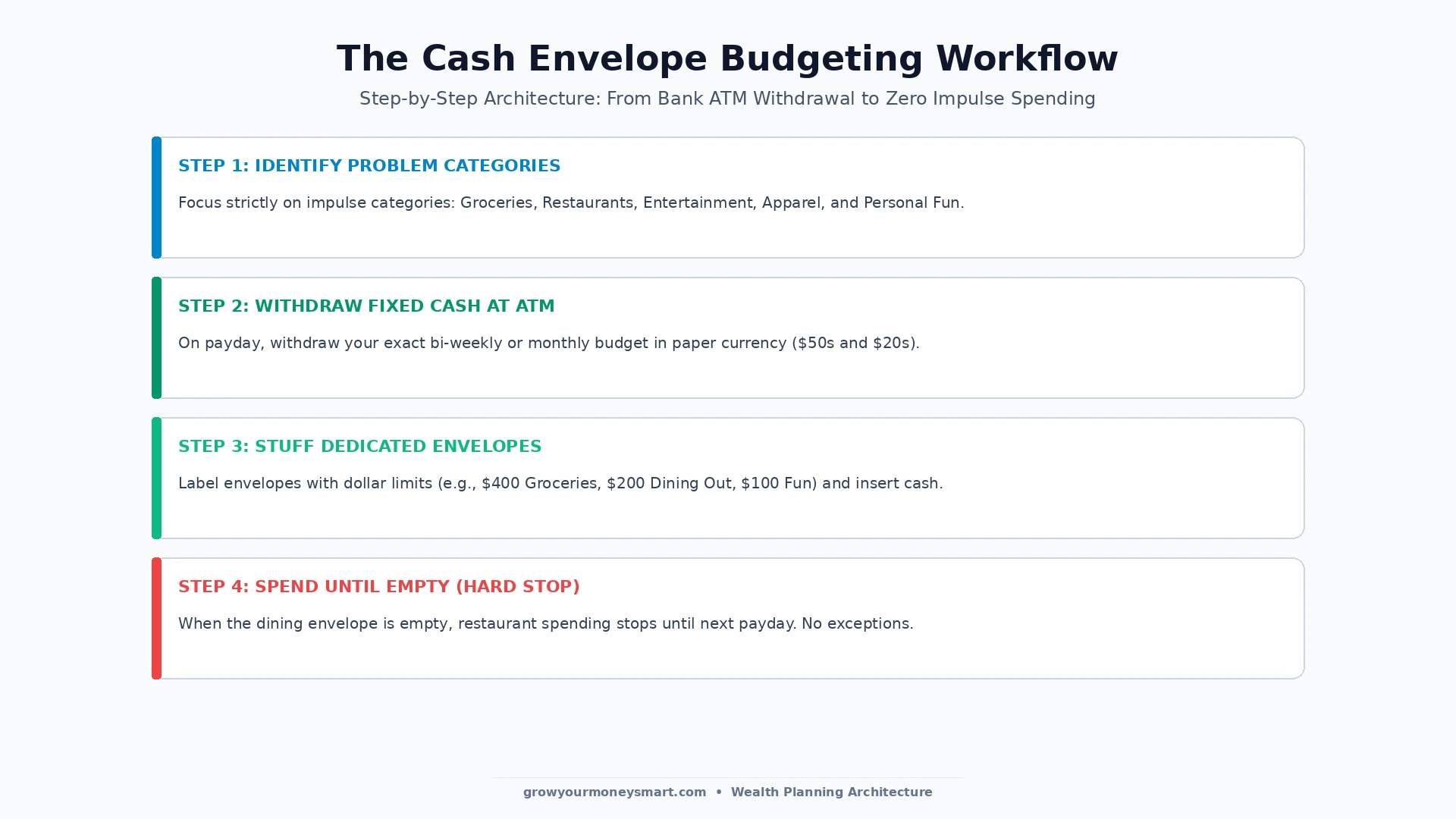
The cash envelope budgeting method divides physical cash into labeled paper envelopes for variable expenses (groceries, dining out, entertainment). Fixed bills stay on auto-pay in your bank. When an envelope runs out of cash, spending in that category stops completely until next payday—killing debt traps.
- Variable Spending Only: Never put rent, mortgage, or car insurance in envelopes. Use cash strictly for problem categories like groceries, restaurants, and shopping.
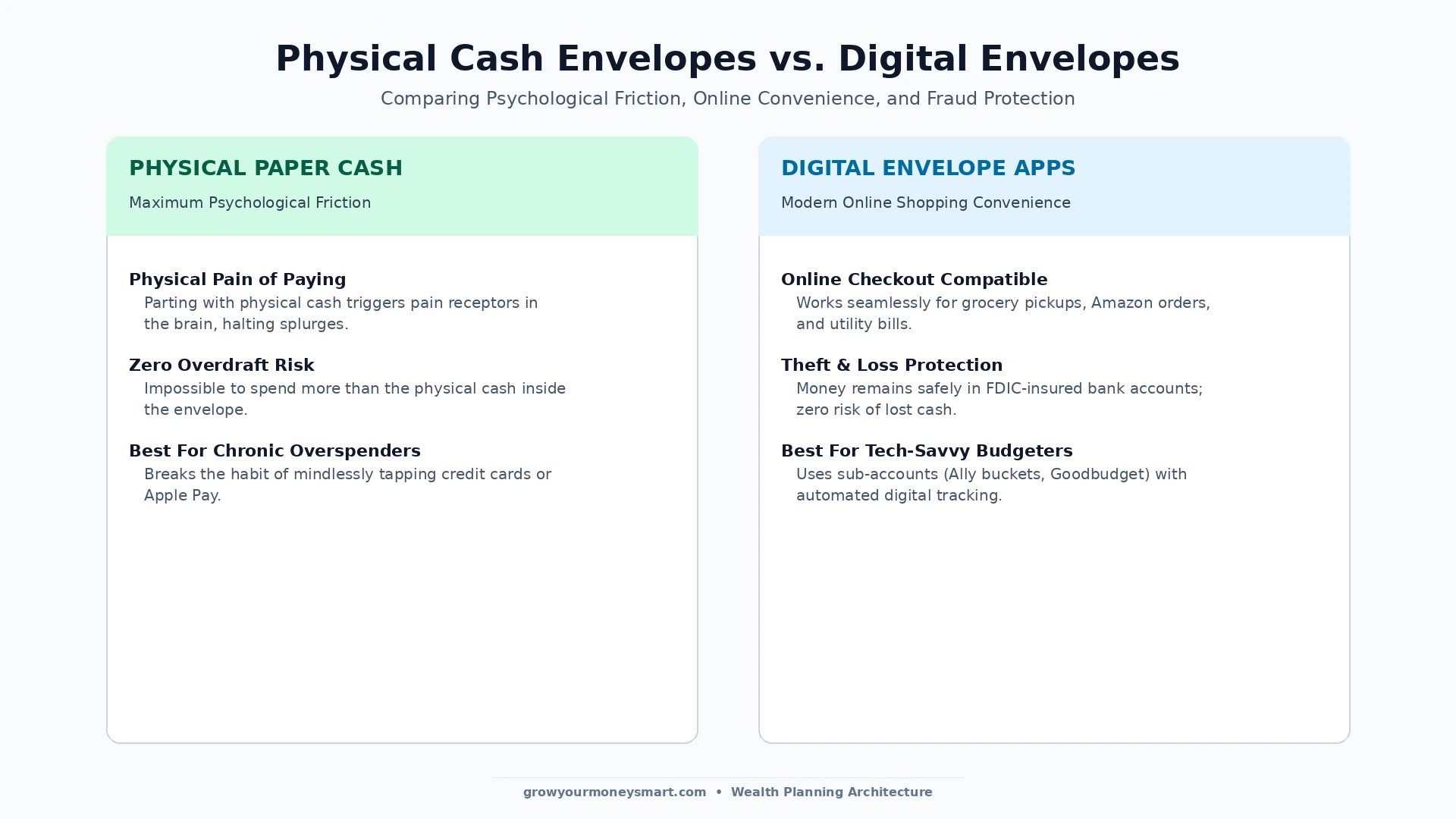
- The Psychology of Cash: Physical paper cash creates behavioral friction that digital credit card tapping completely removes.
- The Zero Overspending Guarantee: When the cash in the envelope hits zero, your spending stops. There is no overdrafting physical paper.
- Digital Alternatives: If you prefer online shopping, use digital envelope apps (like Goodbudget) or banking buckets (like Ally).
- Pair with Sinking Funds: Connect your envelopes to our sinking funds blueprint for complete cash mastery.
If you have tried budgeting apps, spreadsheets, and mental math—only to watch your credit card balance climb higher every month—you are not alone. In a cashless society where money moves with the tap of a phone, spending has become frictionless and psychologically painless.
The cash envelope system (also known as “cash stuffing”) is the ultimate behavioral antidote to modern financial leakage. Popularized by debt-free advocates like Dave Ramsey, this tactile method re-introduces healthy friction to your cash flow, guaranteeing that you never spend money you do not have.
Whether you are trying to break the cycle of living paycheck to paycheck using our paycheck-to-paycheck guide, managing a $3,000 monthly income, or eliminating multiple credit cards with our debt prioritization guide, this beginner masterclass explains exactly how to implement the envelope method step-by-step.
Physical Cash vs. Digital Envelopes: Which Is Right for You?
Before buying paper envelopes, decide whether physical currency or digital app envelopes fit your shopping habits:
The Top 5 Cash Envelope Categories for Beginners
- 1. Groceries & Supermarket Runs: The #1 budget leak for most families. Carrying $150 in cash into the grocery store forces you to stick strictly to your shopping list.
- 2. Dining Out, Cafes & Takeout: Separate restaurant dining from groceries so you never accidentally eat away your essential food money.
- 3. Entertainment, Bars & Events: Keep weekend social outings strictly contained within a fixed cash envelope.
- 4. Personal Care, Beauty & Apparel: Haircuts, clothing purchases, and cosmetics have a designated cash limit.
- 5. Miscellaneous Pocket Fun: $20 to $50 per paycheck in cash to spend completely guilt-free on whatever you desire.
Expert Video Breakdown: Real-World Cash Envelope Setup
To see how to divide cash by spending categories, track receipts, and prevent overspending with physical envelopes, watch The Budget Mom’s tutorial:
Frequently Asked Questions (FAQs)
The cash envelope system is a budgeting method where you take physical paper cash and divide it into labeled envelopes for specific variable spending categories (like groceries, dining out, and entertainment). Once an envelope is empty, you cannot spend any more in that category until the next pay period.
No. Fixed expenses like rent, mortgage, car payments, insurance, and utilities should always remain on electronic auto-pay from your primary checking account. Cash envelopes are reserved strictly for variable, impulse-prone discretionary spending.
The core rule of the cash envelope method is that you do not pull cash from other envelopes or swipe a credit card. If your dining out envelope is empty by the 20th of the month, you eat at home from your grocery pantry until the next paycheck.
Never carry all your cash envelopes with you in your purse or car. Keep your envelopes in a secure fireproof lockbox at home, and only withdraw the specific envelope you need for that day’s shopping trip.
Yes. Digital envelope apps like Goodbudget, Qube Money, or sub-account buckets with online banks like Ally allow you to practice envelope budgeting digitally while making online purchases.
Neuroscience studies show that handing over physical cash activates the brain’s pain receptors (the insula), whereas swiping plastic creates zero emotional friction. Cash forces you to feel the loss of money immediately.
Leftover cash can be used as a small reward, rolled over into your high-yield emergency savings account, or channeled into accelerated debt payoff using our debt snowball calculator.
Chronic credit card overspenders, people living paycheck to paycheck, and visual learners who struggle with spreadsheets benefit the most from the strict physical boundaries of cash envelopes.

Jaiveer Hooda is a personal finance researcher and the founder of Grow Your Money Smart. With a background in computer engineering, he approaches money the way an engineer approaches any complex system — through data analysis, mathematical modeling, and ruthless optimization.
He built this platform on a single conviction: financial freedom is not a matter of luck. It is a system that can be designed, tested, and executed by anyone willing to follow the right blueprint. Every strategy published here is researched to the numbers, not written to the trend.
Expertise: Debt elimination · Retirement planning · Passive income · Budgeting systems
Connect: Pinterest | growyourmoneysmart.com | Contact Us