FDIC $250k Limits: How to Insure $1 Million+ Safely (2026)
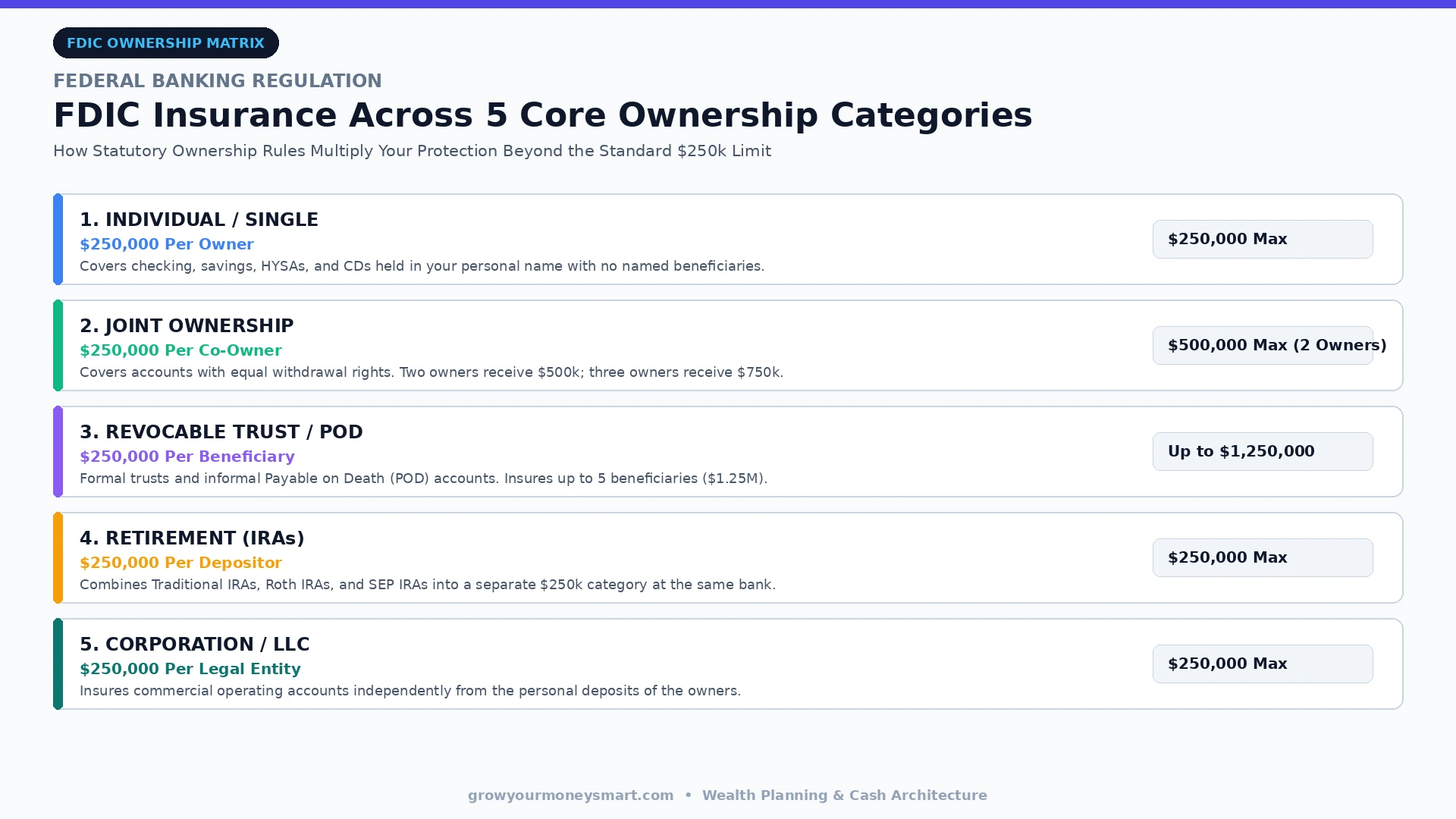
Chart detailing the 5 FDIC ownership categories including Single, Joint, Revocable Trust POD, Retirement IRAs, and Corporate accounts.

⚡ [QUICK ANSWER] FDIC Insurance Limits at a Glance The Federal Deposit Insurance Corporation (FDIC) provides standard coverage of $250,000 per depositor, per insured bank, for each account ownership category. You are not restricted to $250,000 per bank. By strategically structuring account ownership categories (single accounts, joint accounts, revocable trusts, and IRAs), a married couple … Read more
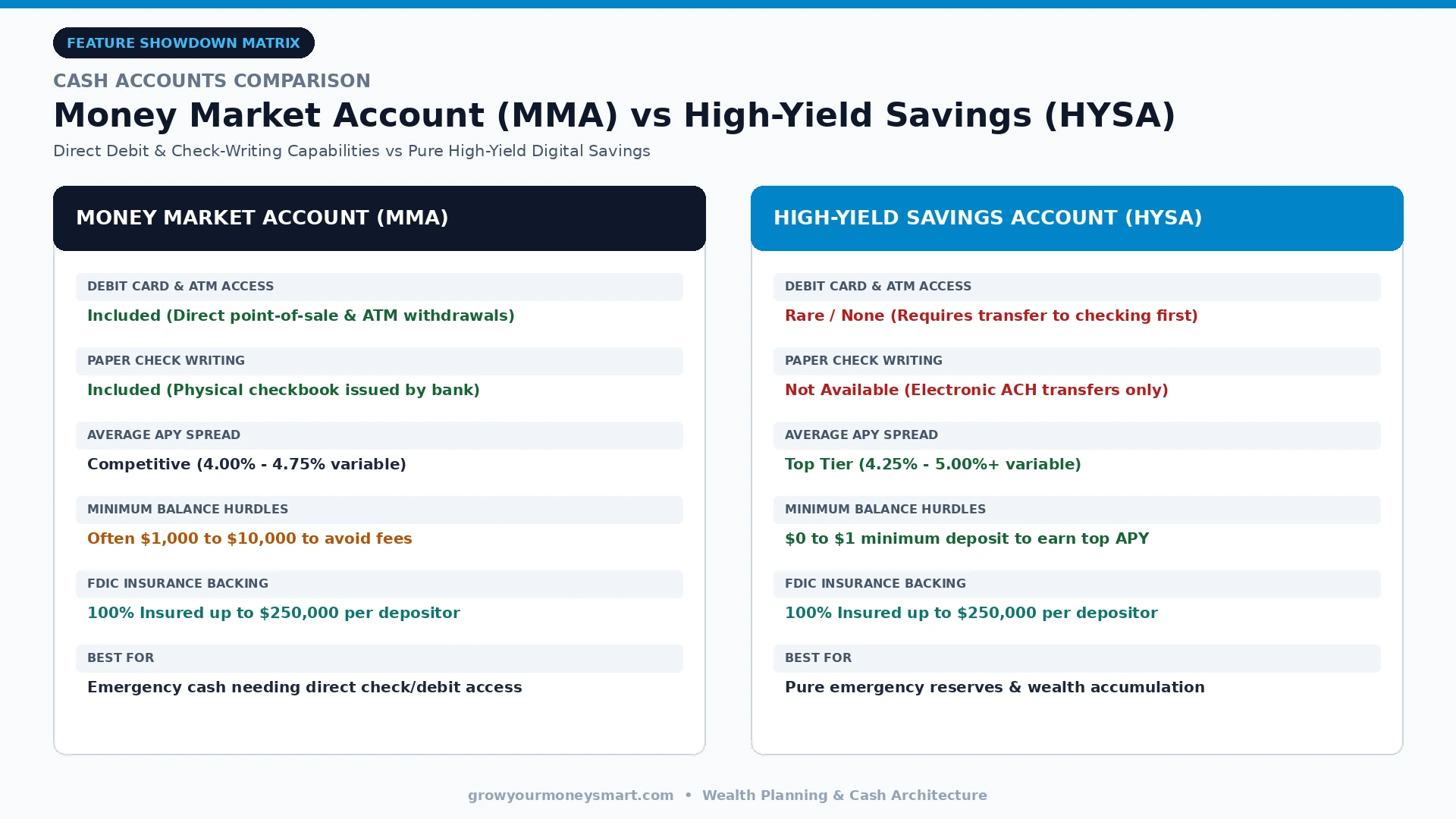
Money Market vs HYSA (2026): Key Differences Explained

Side-by-side comparison of Money Market Accounts and High-Yield Savings Accounts comparing debit cards, paper check writing, and APYs.

⚡ [QUICK ANSWER] Money Market Account vs HYSA at a Glance A Money Market Account (MMA) is an FDIC-insured bank deposit account that blends high savings yields with checking account features like debit cards and check-writing privileges. A High-Yield Savings Account (HYSA) focuses strictly on maximizing APY with pure digital transfers and zero checking frills. … Read more

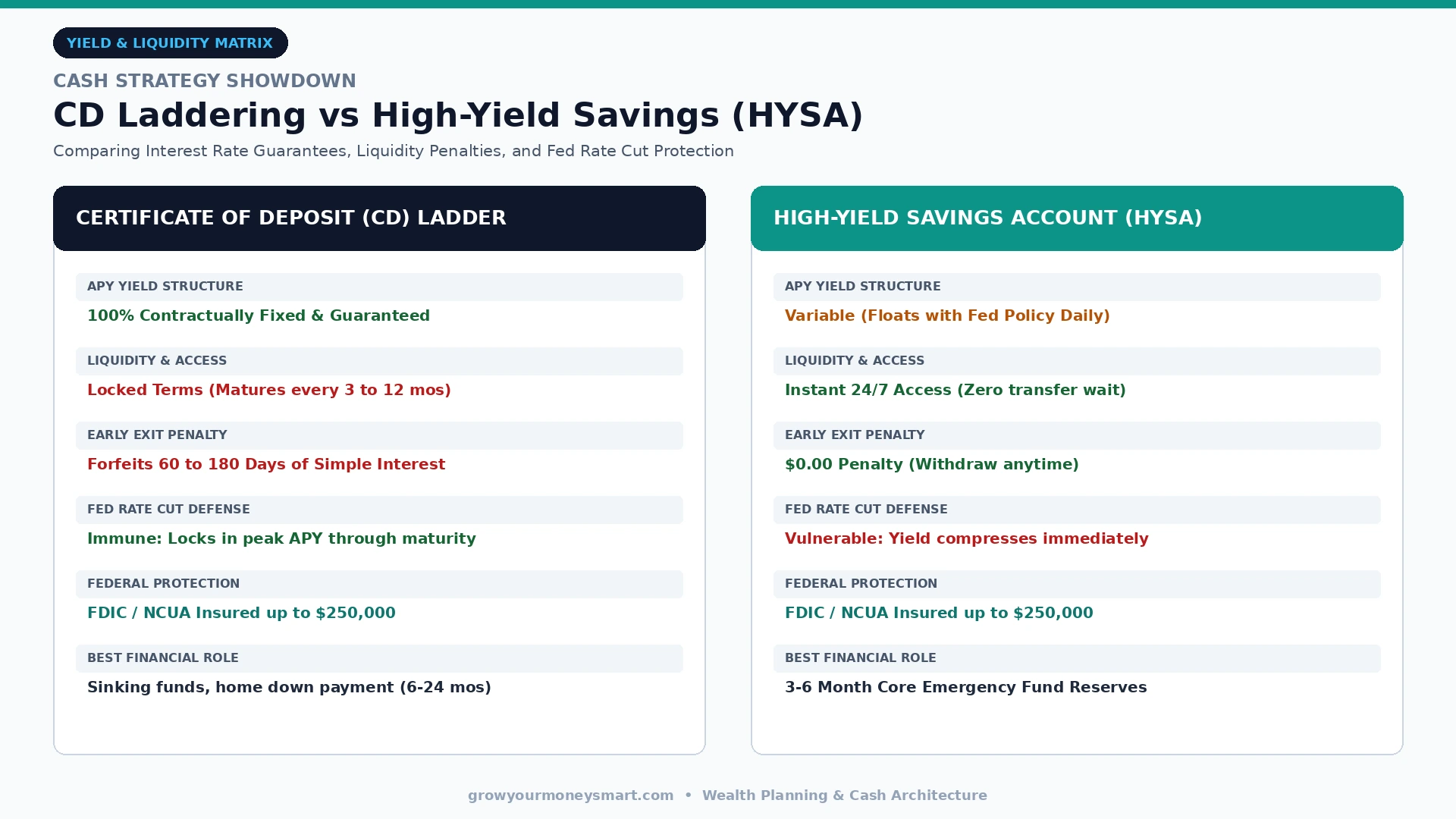
CD Laddering vs HYSA in 2026: Which Earns More Yield?

Comparison matrix of CD laddering vs high-yield savings accounts showing APY yield structure, liquidity access, and early exit penalties.

⚡ [QUICK ANSWER] CD Laddering vs HYSA at a Glance A Certificate of Deposit (CD) ladder locks in fixed APY yields (typically 4.25%–4.75%) across staggered maturities, shielding your interest from Federal Reserve rate cuts in exchange for early withdrawal penalties. A High-Yield Savings Account (HYSA) offers 100% daily liquidity with zero penalties, but features variable … Read more

The 5.0% HYSA Window Is Closing: Where to Park Your Cash Right Now

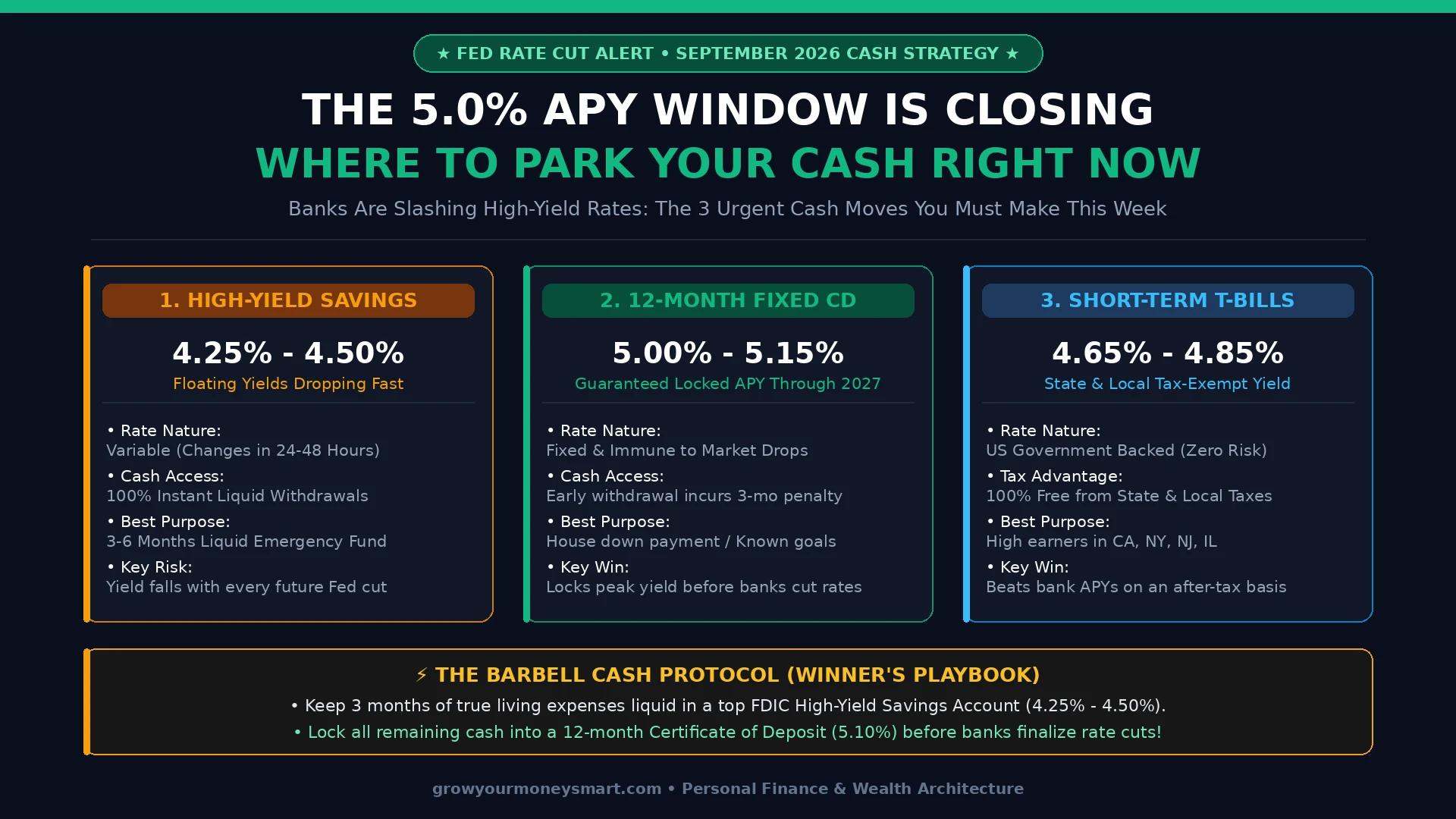
Infographic comparing high-yield savings accounts, fixed certificates of deposit, and Treasury bills following the Federal Reserve interest rate cut

The Federal Reserve’s long-anticipated interest rate decision has finally dropped, and if you have cash parked in an online savings account, the clock is officially ticking. Over the past two years, savers enjoyed an unprecedented golden era of risk-free yields hovering comfortably between 5.00% and 5.50% APY. But with the Fed executing a aggressive 50-basis-point … Read more

HSA Triple Tax Advantage: Stealth Retirement Account

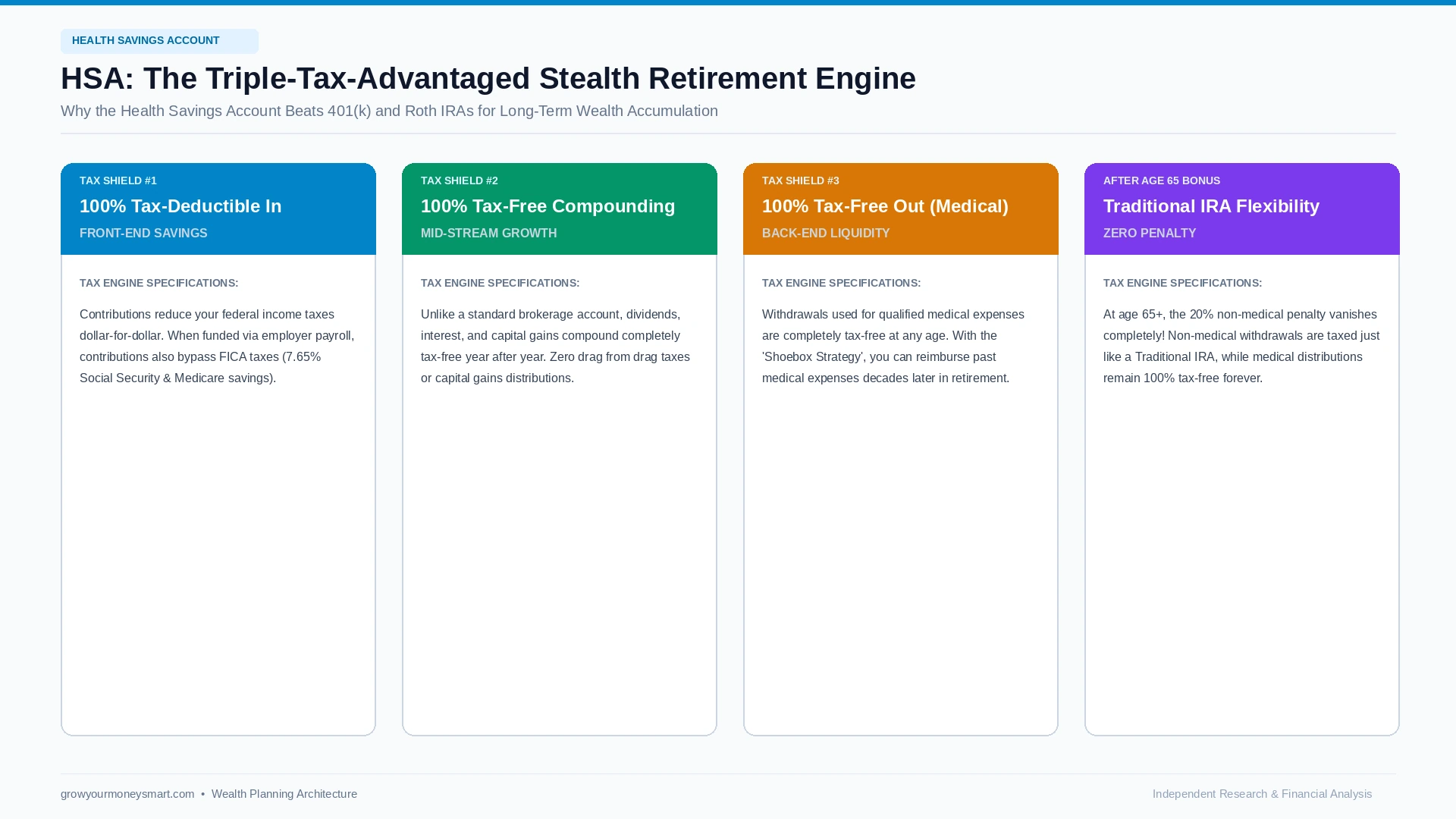
HSA as retirement account infographic explaining the triple tax advantage and shoebox reimbursement strategy

[QUICK ANSWER] The HSA Stealth Retirement Engine at a Glance The HSA Triple Tax Advantage operates as the single most tax-efficient retirement vehicle in the United States: contributions are 100% tax-deductible (and bypass 7.65% FICA payroll taxes), investment earnings compound completely tax-free, and distributions for qualified medical expenses are 100% tax-free at any age. In … Read more

Cash Envelope System: Step-by-Step Beginner Guide (2026)

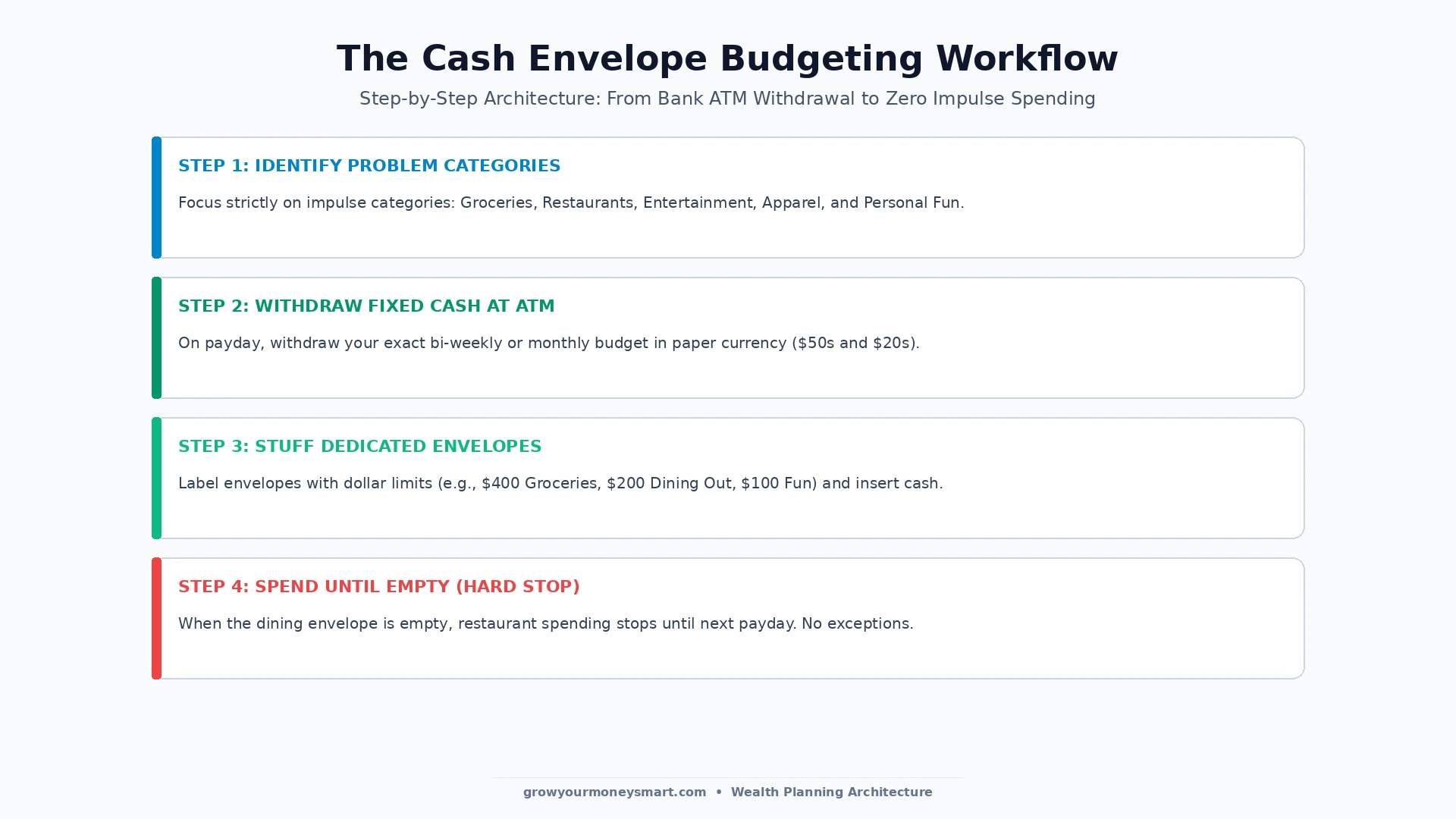
Workflow diagram illustrating the cash envelope budgeting method from identifying problem categories to stuffing envelopes and hard stop spending

[QUICK ANSWER] The Cash Envelope System at a Glance The cash envelope budgeting method divides physical cash into labeled paper envelopes for variable expenses (groceries, dining out, entertainment). Fixed bills stay on auto-pay in your bank. When an envelope runs out of cash, spending in that category stops completely until next payday—killing debt traps. ⚡ … Read more

70/20/10 Budget Rule vs 50/30/20: Which Is Better? (2026)

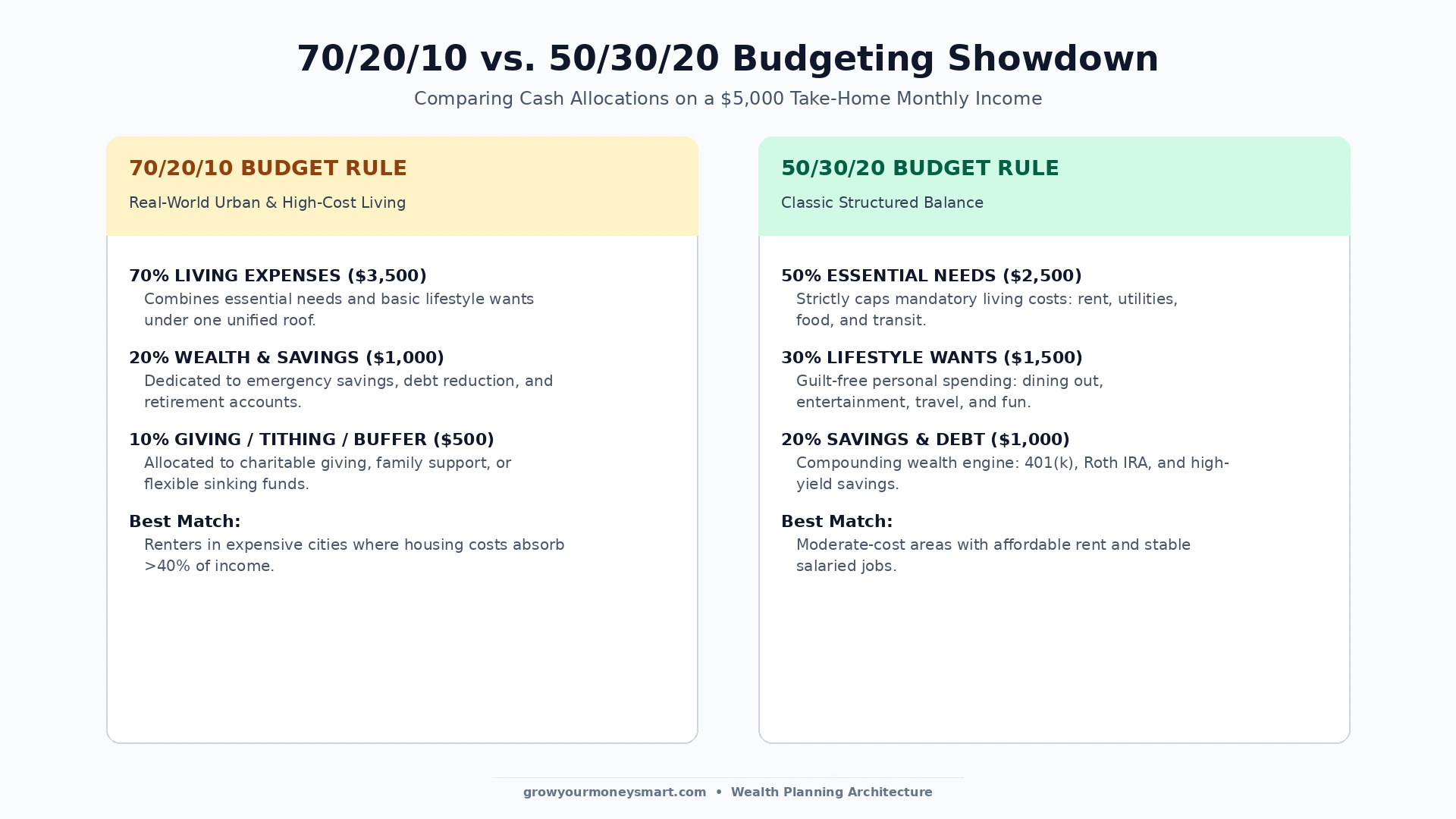
Comparison chart showing the 70 20 10 budget rule versus the 50 30 20 budget rule across living expenses savings and giving

[QUICK ANSWER] 70/20/10 vs 50/30/20 at a Glance The 70/20/10 rule allocates 70% of take-home pay to all living expenses (needs and wants combined), 20% to savings/debt, and 10% to giving or sinking funds. The 50/30/20 rule splits expenses into 50% needs and 30% wants. Use 70/20/10 in high-rent urban markets; use 50/30/20 for stricter … Read more

How to Automate Savings: Hands-Free 2026 System

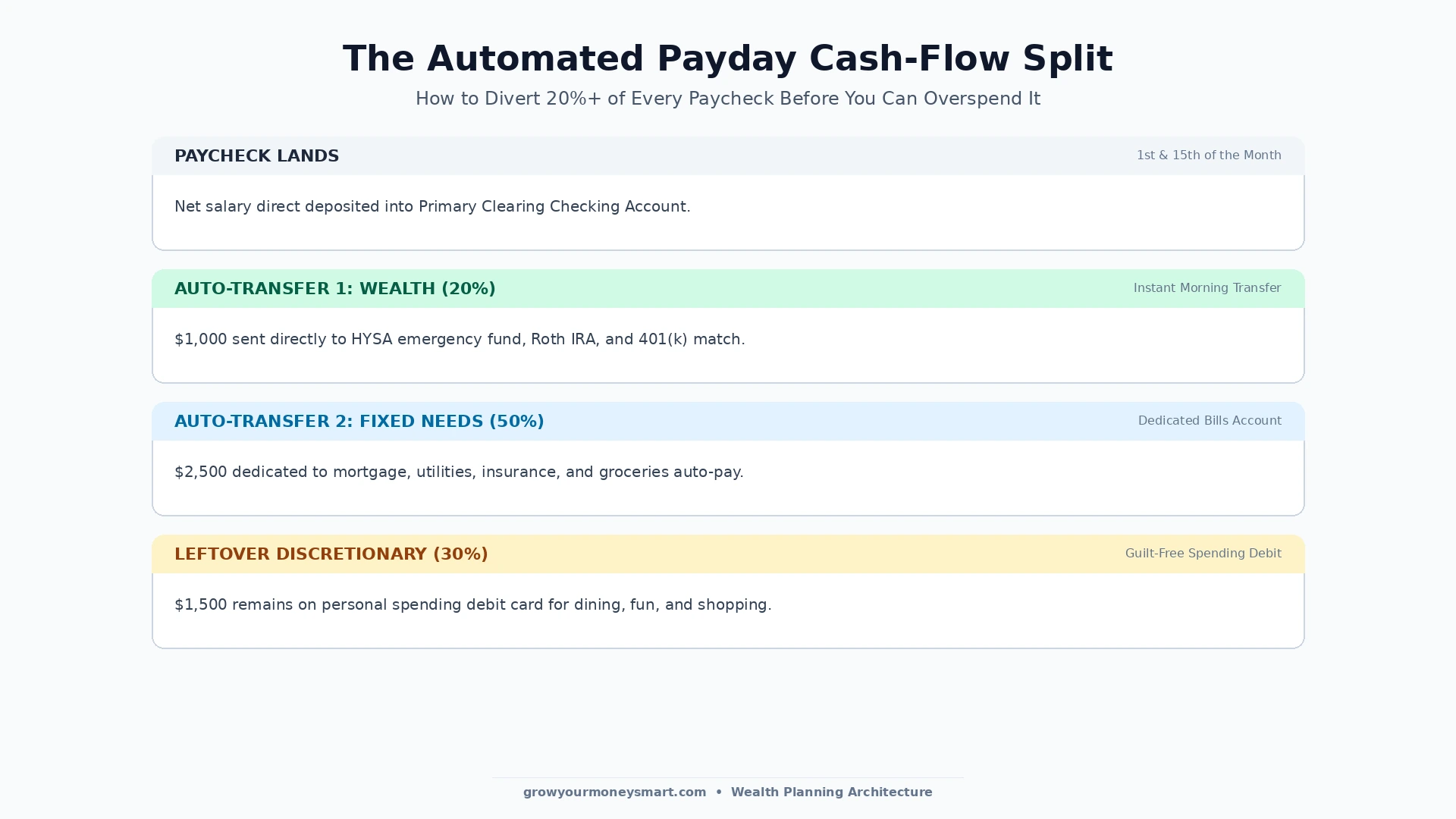
Cash flow diagram illustrating automated direct deposit splitting across wealth building needs and guilt free spending

[QUICK ANSWER] How to Automate Savings at a Glance To automate your savings, practice ‘Pay Yourself First’: split your payroll direct deposit so 20% routes straight into an FDIC-insured 4.0%+ HYSA and Roth IRA on payday. Put fixed living bills on automated full-balance payment, and spend only the remainder on a separate debit card. ⚡ … Read more

What Is a Sinking Fund? 8 Sinking Funds You Need (2026)

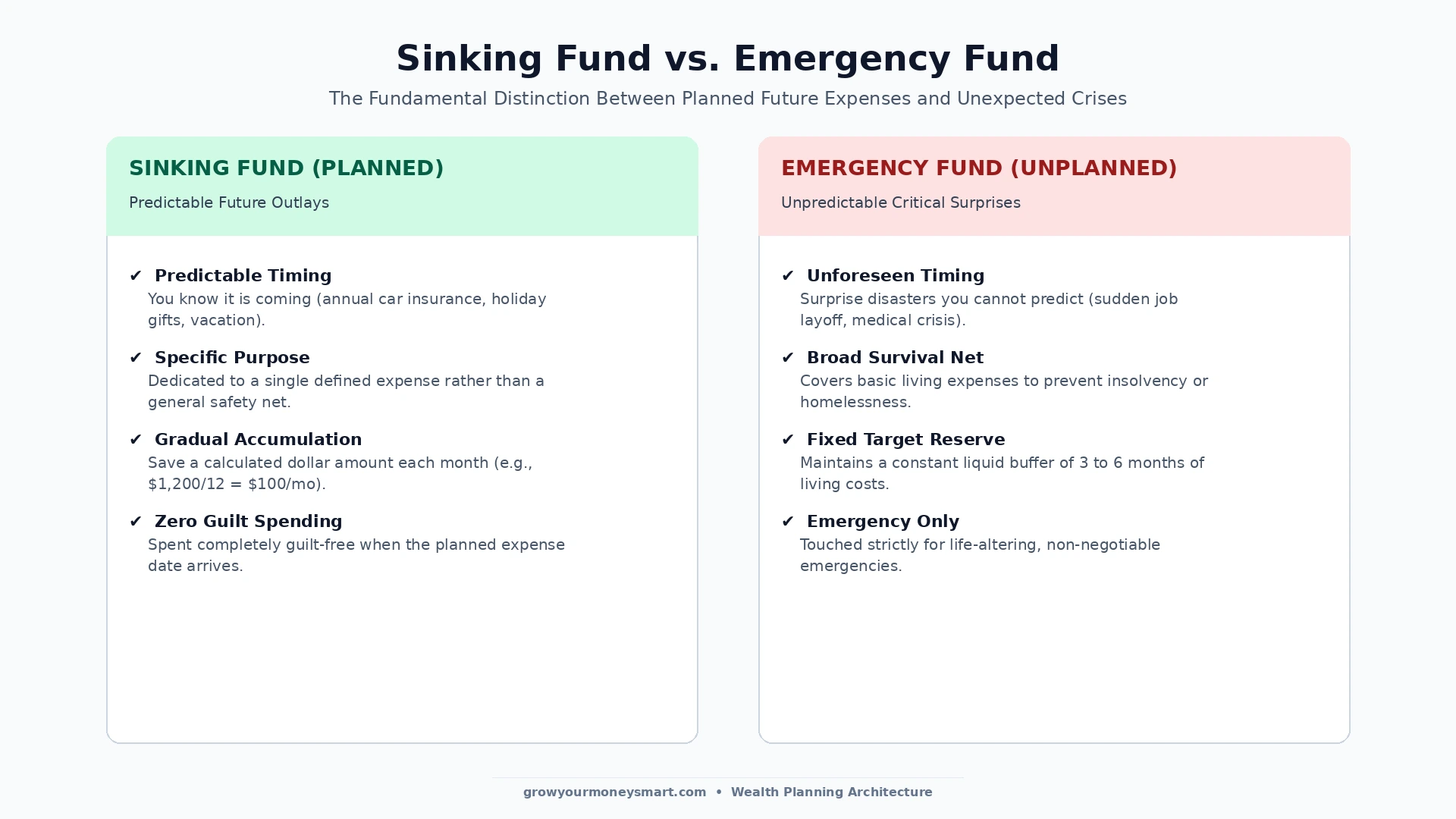
Comparison chart illustrating the difference between a sinking fund for planned future expenses and an emergency fund for unexpected crises

[QUICK ANSWER] What Is a Sinking Fund at a Glance A sinking fund is a strategic savings method where you save a set amount of money each month for a specific, expected future expense—such as car repairs, holiday gifts, or annual insurance premiums. Unlike emergency funds, sinking funds cover predictable costs, eliminating credit card debt … Read more

Receive the latest articles in your inbox

Join smart readers getting actionable personal finance tips, debt payoff blueprints, and retirement guides directly to their inbox.

⚖️ Important Financial Disclaimer & Educational Notice

The articles, calculators, debt payoff strategies, and financial tools on Grow Your Money Smart are provided strictly for general educational, illustrative, and informational purposes. Content published on this website does not constitute tailored financial, investment, tax, or legal advice.

Financial markets, interest rates, and personal financial circumstances vary significantly. You should evaluate your unique financial situation or consult a licensed Fiduciary, Certified Financial Planner (CFP®), or certified tax professional before making any significant financial decisions.

×