How to Budget a $5,000 Monthly Salary: 2026 Blueprint
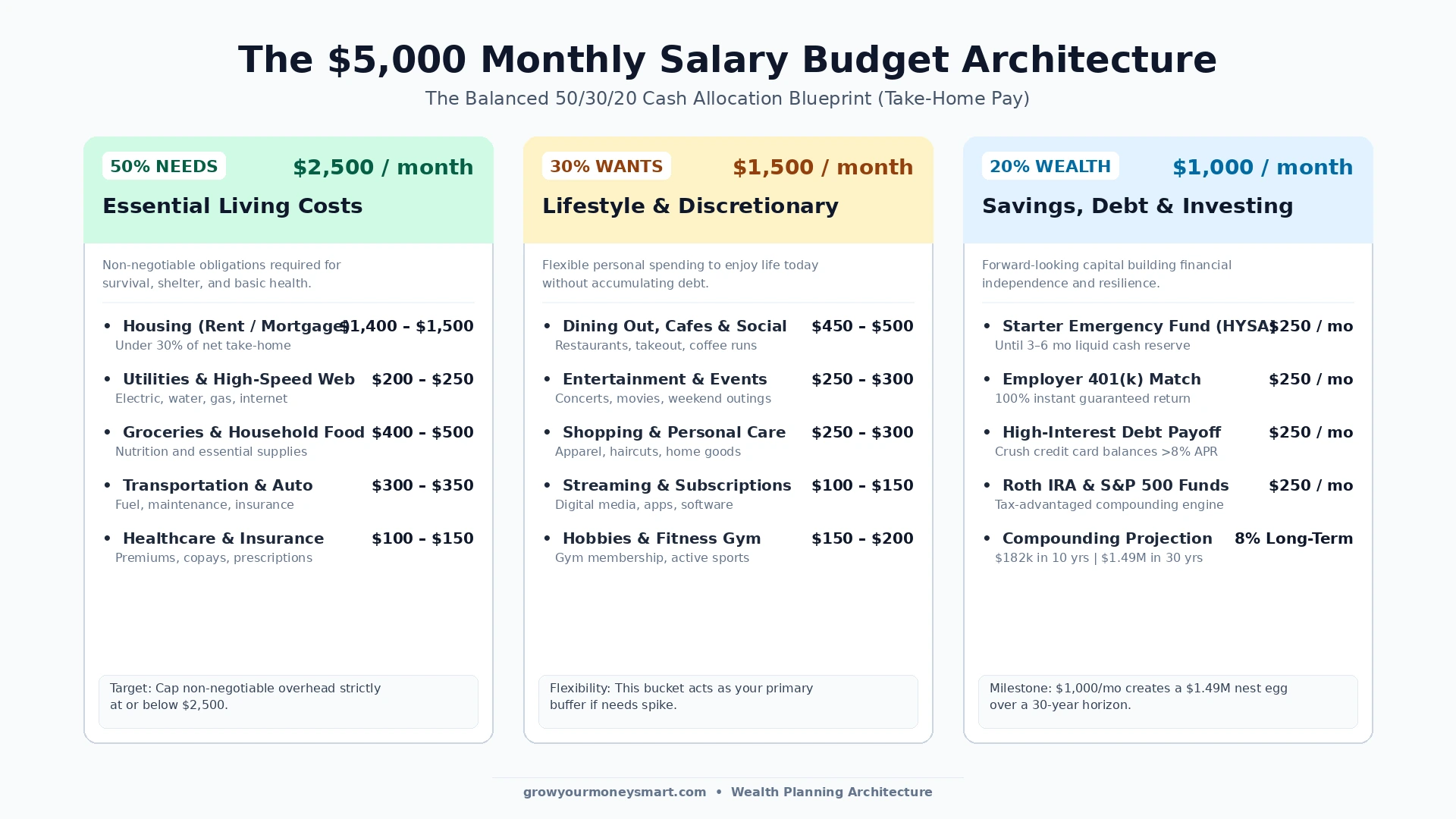
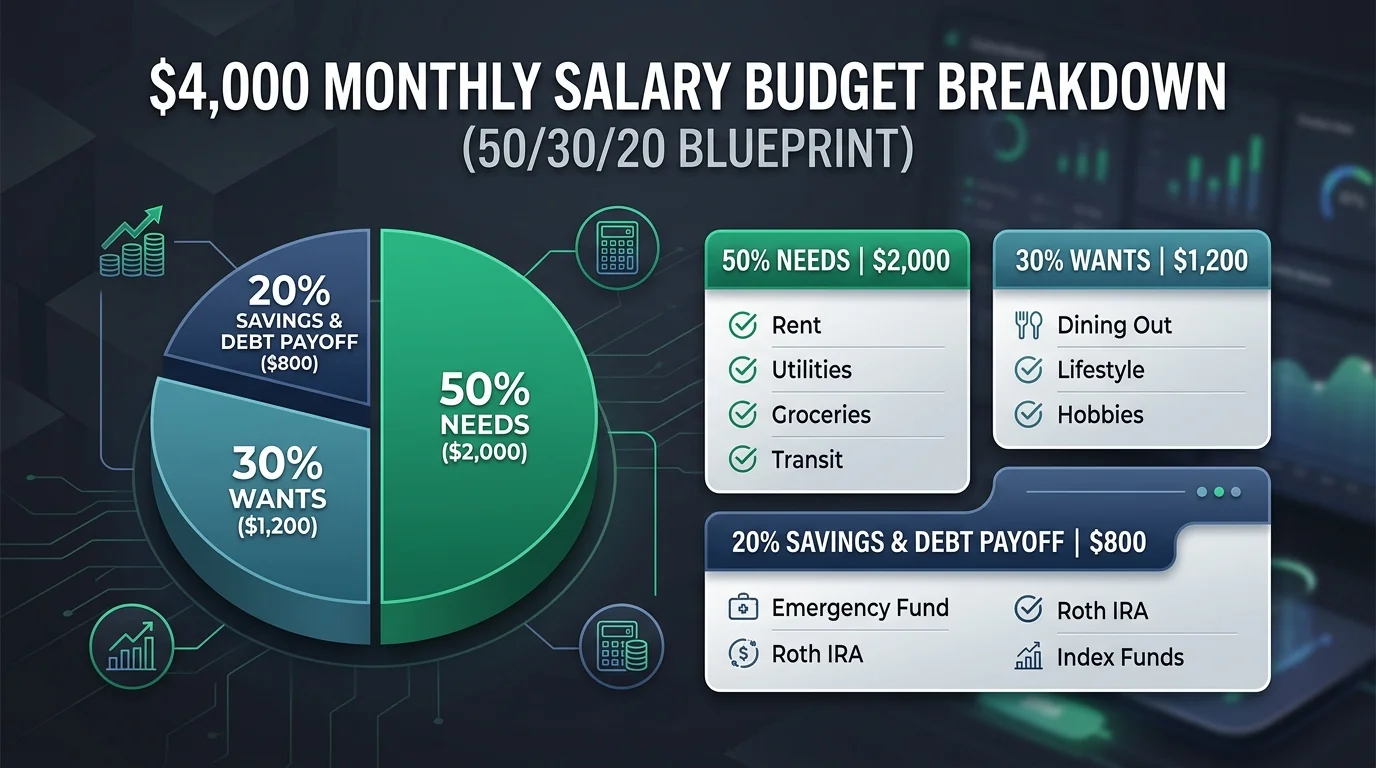
Visual architecture diagram showing how to budget a $5000 monthly salary using the 50/30/20 framework with $2,500 needs, $1,500 wants, and $1,000 savings

[QUICK ANSWER] How to Budget a $5,000 Monthly Salary at a Glance To budget a $5,000 monthly salary effectively, allocate your take-home pay using the 50/30/20 framework: $2,500 (50%) for essential needs, $1,500 (30%) for discretionary lifestyle wants, and $1,000 (20%) for debt payoff and compounding savings. Cap housing at $1,500 and automate your $1,000 … Read more
How to Budget a $6,000 Monthly Income: 2026 Blueprint

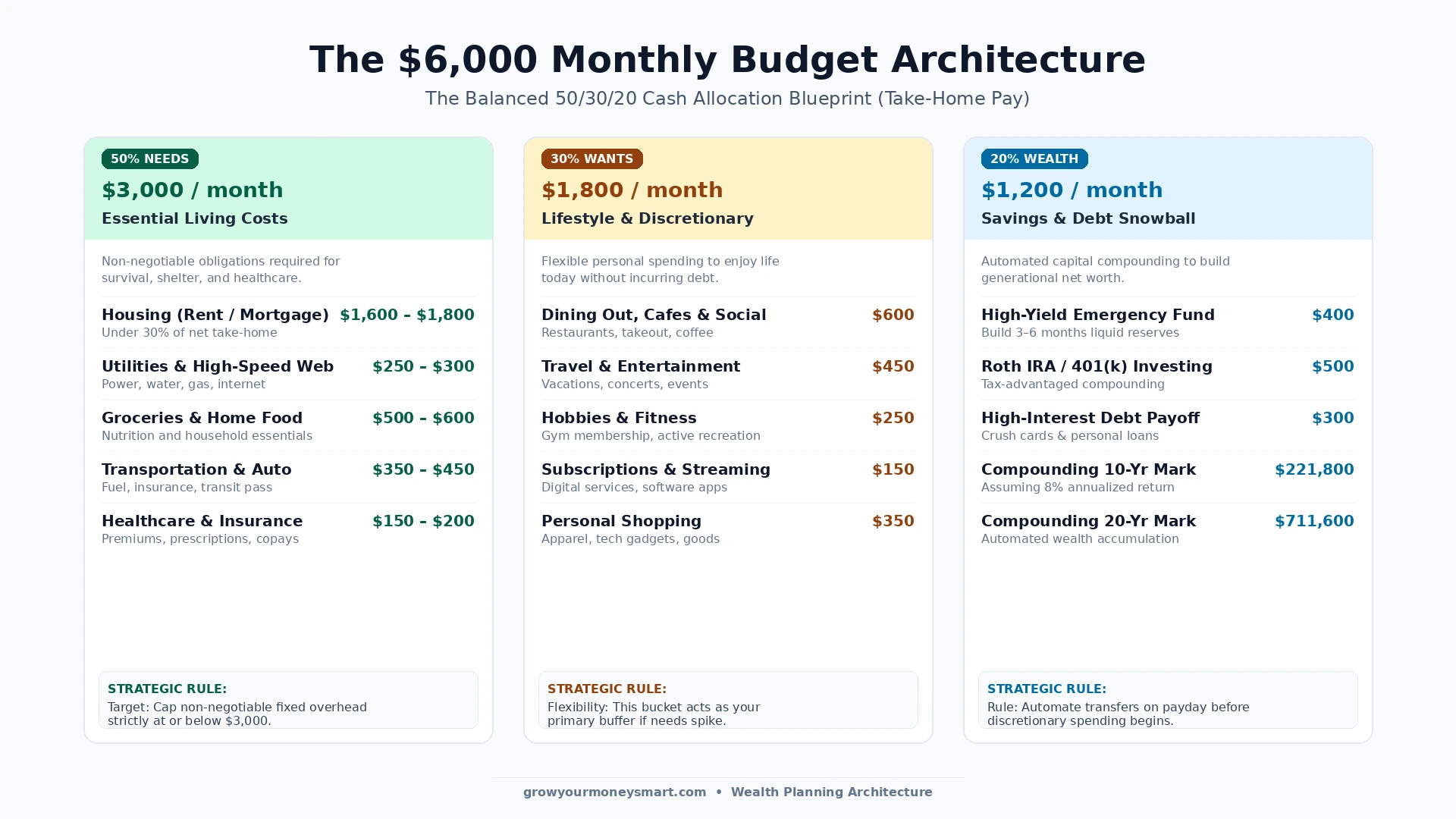
Visual architecture diagram showing how to budget a $6000 monthly income using the 50/30/20 framework with $3,000 needs, $1,800 wants, and $1,200 savings

Quick Answer $6,000 Monthly Budget at a Glance To budget a $6,000 monthly income effectively, apply the 50/30/20 rule to your take-home pay: allocate $3,000 (50%) to essential needs, $1,800 (30%) to flexible lifestyle wants, and $1,200 (20%) to debt payoff and compounding wealth. Cap housing at $1,800 and automate your $1,200 savings transfer on … Read more

The Complete Emergency Fund & High-Yield Savings (HYSA) Master Guide (2026)

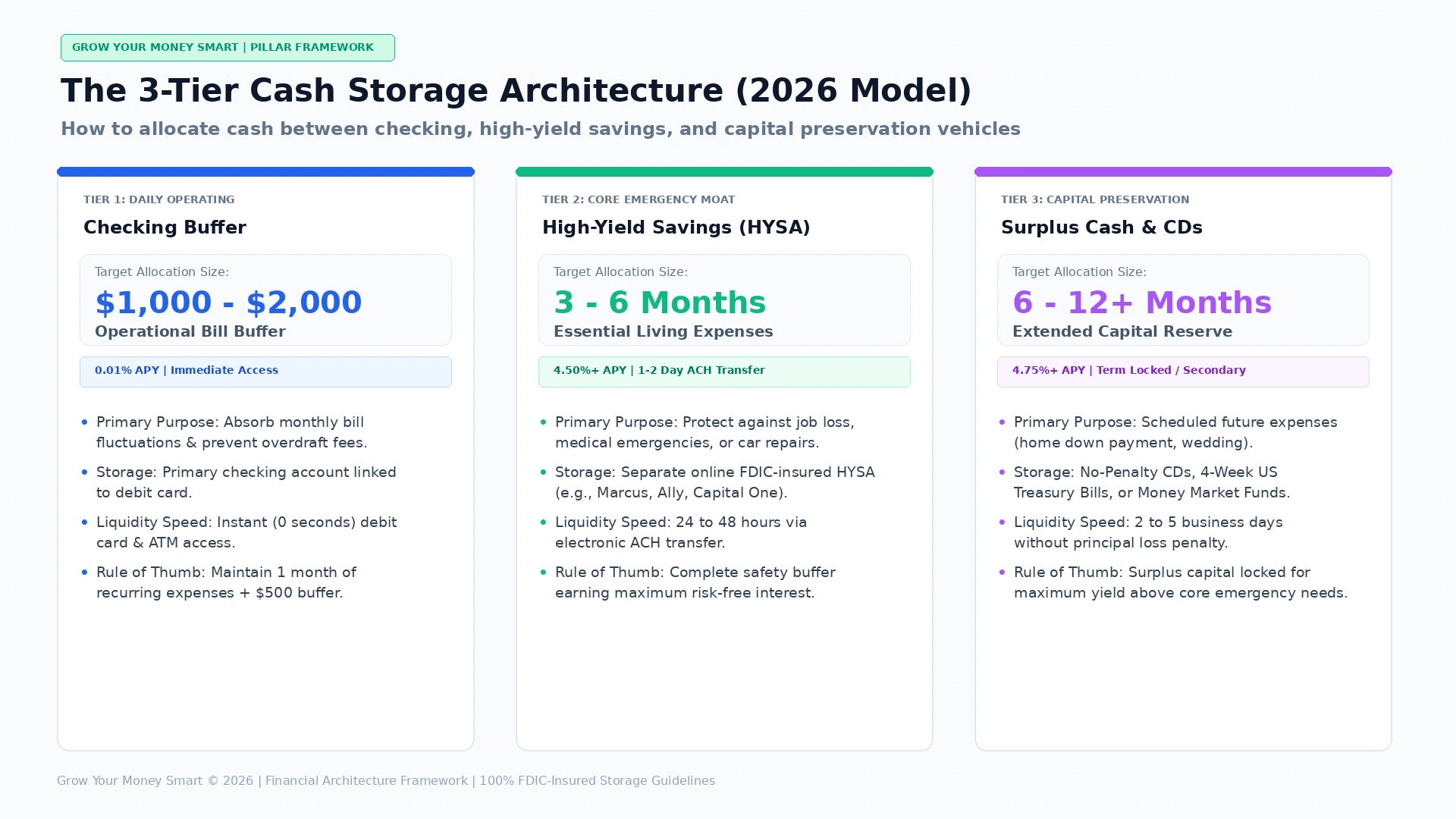
The 3-Tier Cash Storage Architecture diagram showing checking buffer, high-yield savings account, and capital preservation reserve

⚡ 30-Second Strategic Takeaways The 0.01% Wealth Trap: Leaving a $25,000 emergency reserve in a traditional mega-bank paying 0.01% APY forfeits over $6,140 in risk-free compound interest over 5 years compared to a 4.50% High-Yield Savings Account (HYSA). The 3-Tier Storage Model: Never keep all cash in one bucket. Divide liquidity into Tier 1 Checking … Read more

HYSA vs Stocks: Where to Put Your Money in 2026?

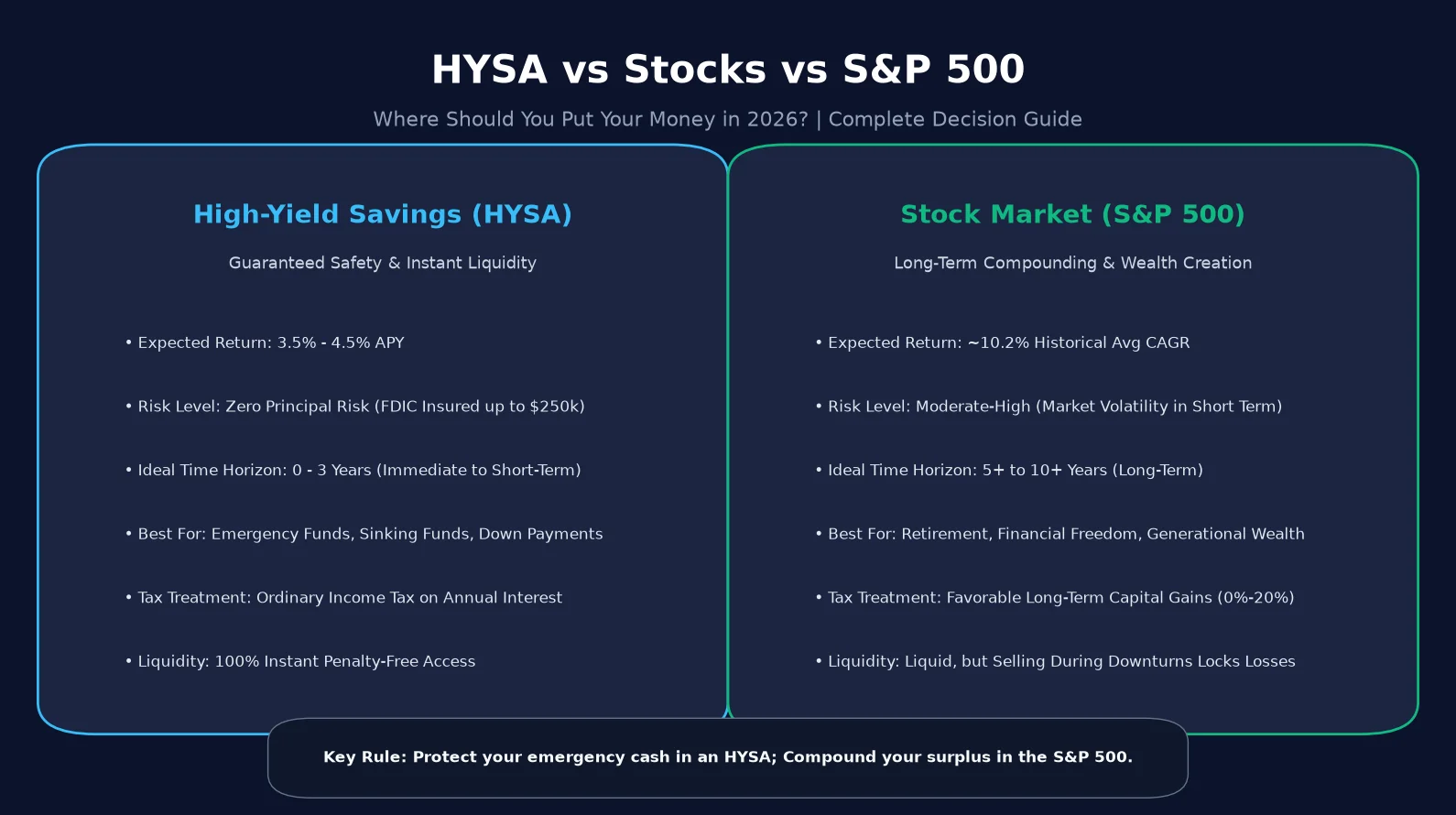
HYSA vs stocks comparison infographic highlighting safety, APY yield, S&P 500 returns, and investment timelines for 2026

✓ Fact Checked & Verified | Updated: September 2026 | Reviewed by Financial Planning Desk Editorial Note: Consolidated Mega-Pillar Guide comparing Cash Yields vs Equity Compounding. ⚡ 30-Second Quick Takeaways: HYSA vs Stocks in 2026 Core Difference: A High-Yield Savings Account (HYSA) provides guaranteed capital preservation with zero market risk (yielding ~4.0%–5.0% APY), whereas stocks … Read more

Zero-Based Budgeting vs 50/30/20: Which Is Best? (2026)

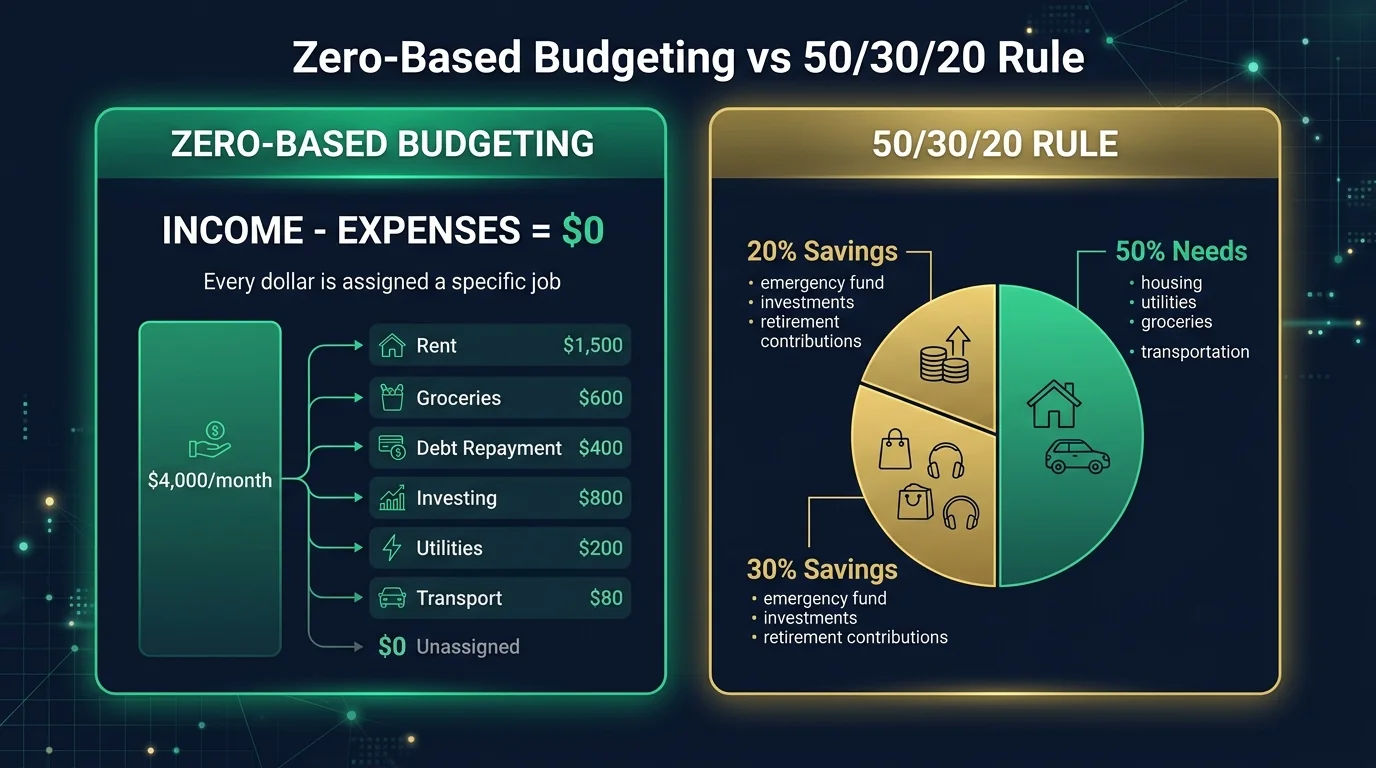
Comparison infographic illustrating Zero-Based Budgeting with Income minus Expenses equals Zero versus the 50 30 20 rule percentage buckets

⚡ 30-Second Quick Takeaways: Choosing Your Ideal Budgeting Framework Core Philosophical Difference: Zero-Based Budgeting (ZBB) is a bottom-up, micro-management framework where Income − Expenses = $0 (every dollar gets a specific task). The 50/30/20 Rule is a top-down, macro-allocation framework dividing after-tax income into Needs (50%), Wants (30%), and Wealth Building (20%). Fastest Debt Payoff: … Read more

How to Start Investing with $100 a Month: 2026 Guide

How to start investing with $100 a month automated compounding growth infographic

⚡ 30-Second Quick Takeaways Zero Minimums Revolution: Thanks to fractional shares and $0-commission brokerages (Fidelity, Charles Schwab, Vanguard), $100/month unlocks the exact same institutional-grade index funds held by top wealth managers. Compounding Snowball: Investing $100/month ($1,200/year) at a historical 10% S&P 500 average return grows into $20,655 in 10 years, $75,937 in 20 years, and … Read more

Receive the latest articles in your inbox

Join smart readers getting actionable personal finance tips, debt payoff blueprints, and retirement guides directly to their inbox.

⚖️ Important Financial Disclaimer & Educational Notice

The articles, calculators, debt payoff strategies, and financial tools on Grow Your Money Smart are provided strictly for general educational, illustrative, and informational purposes. Content published on this website does not constitute tailored financial, investment, tax, or legal advice.

Financial markets, interest rates, and personal financial circumstances vary significantly. You should evaluate your unique financial situation or consult a licensed Fiduciary, Certified Financial Planner (CFP®), or certified tax professional before making any significant financial decisions.

×