Is Long-Term Care Insurance Worth It in 2026? Guide
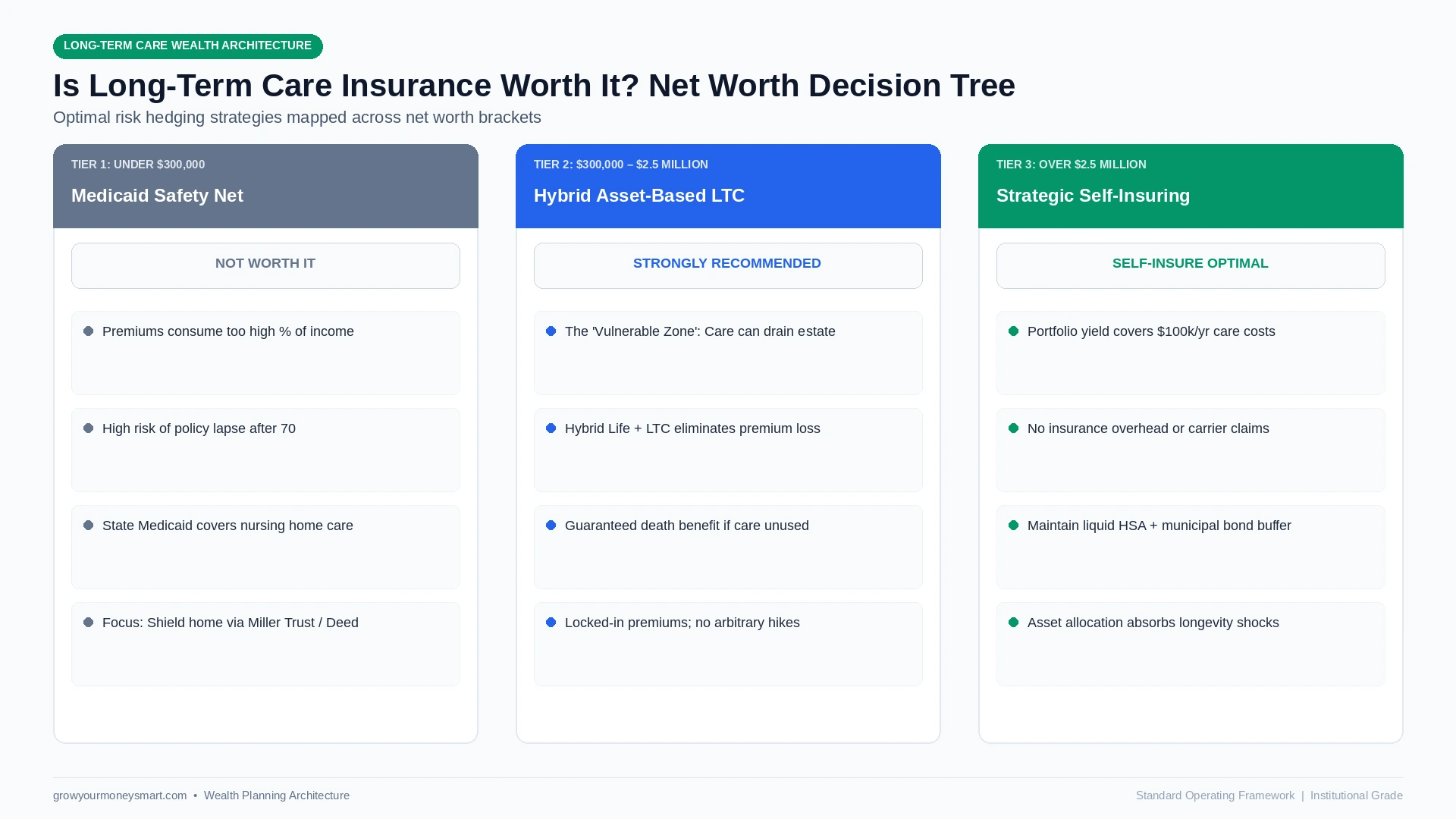
is long term care insurance worth it decision tree mapped by household net worth

[QUICK ANSWER] Is Long-Term Care Insurance Worth It in 2026? Deciding whether is long term care insurance worth it depends strictly on your household net worth: It is generally not worth it for individuals with under $300,000 in assets (who qualify for Medicaid) or over $2.5 million (who can self-insure via portfolio yield). However, for … Read more
How to Rollover a 401(k) to an IRA Without Taxes (2026)

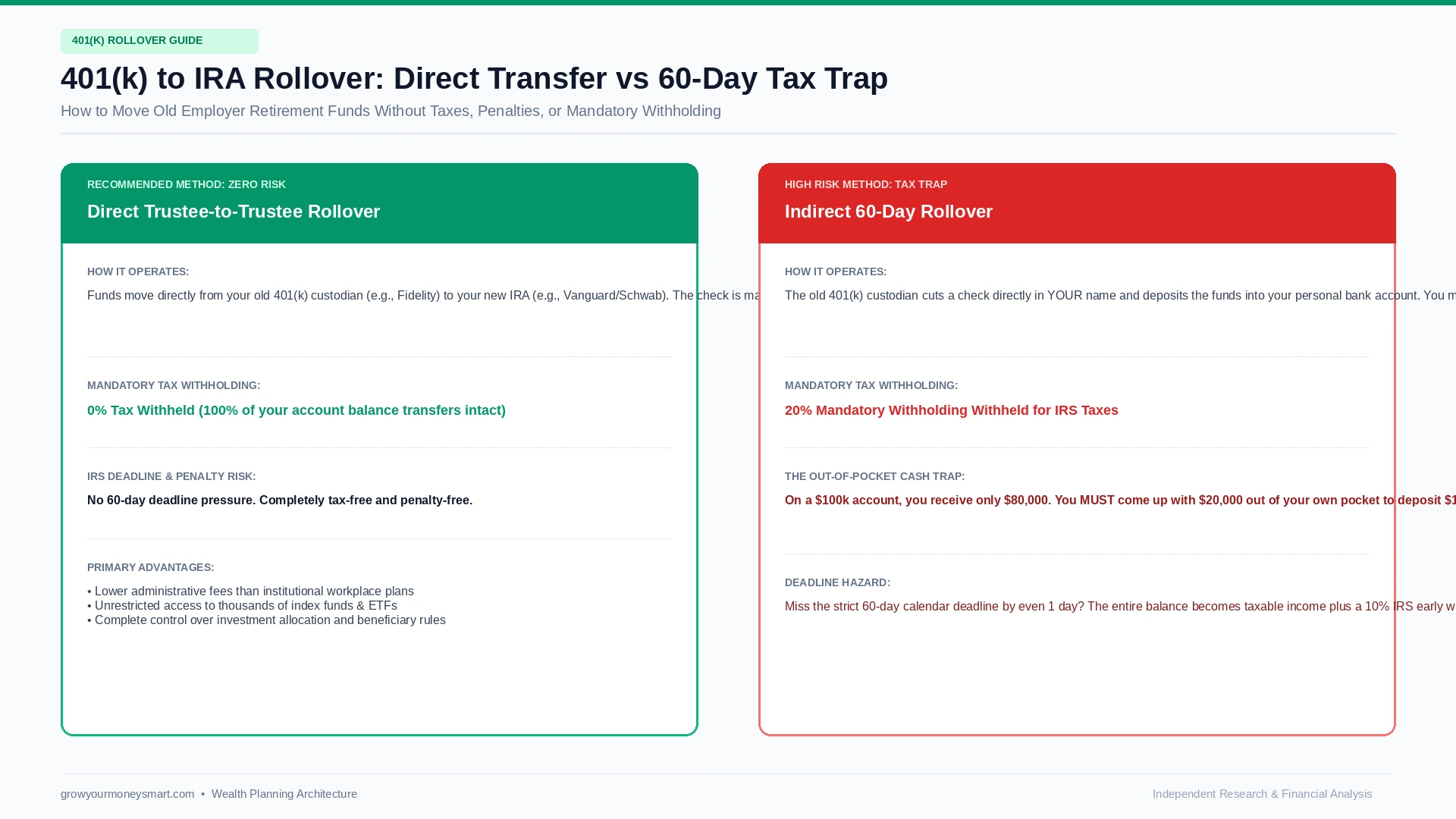
401k rollover to IRA comparison diagram highlighting direct rollover vs indirect 60 day rollover tax trap

[QUICK ANSWER] How to Rollover a 401(k) to an IRA at a Glance To Rollover a 401(k) to an IRA without triggering income taxes or early withdrawal penalties, you must execute a Direct Trustee-to-Trustee Rollover. In a direct rollover, your former 401(k) custodian transfers funds directly to your new IRA custodian (or issues a check … Read more

Backdoor Roth IRA: Step-by-Step Guide for High Earners

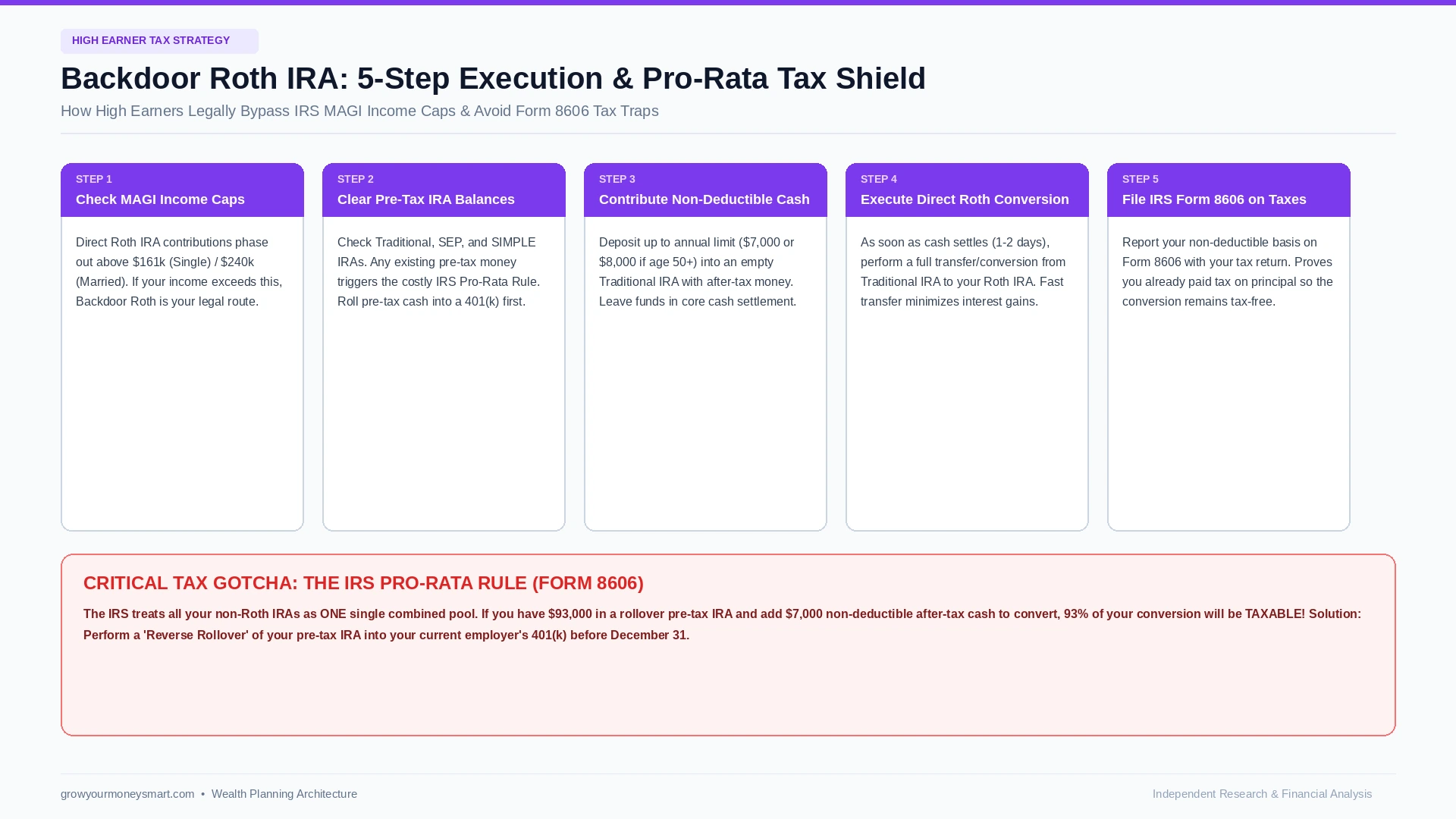
Backdoor Roth IRA guide workflow diagram showing non deductible contribution conversion and pro rata rule prevention

[QUICK ANSWER] Backdoor Roth IRA Strategy at a Glance A Backdoor Roth IRA is an IRS-sanctioned two-step wealth strategy allowing high earners exceeding annual income limits ($161,000 for single filers and $240,000 for married filing jointly in 2026) to legally fund a Roth IRA. By making a non-deductible contribution to an empty Traditional IRA and … Read more

The 4% Rule Explained: Safe Withdrawal Rate in 2026

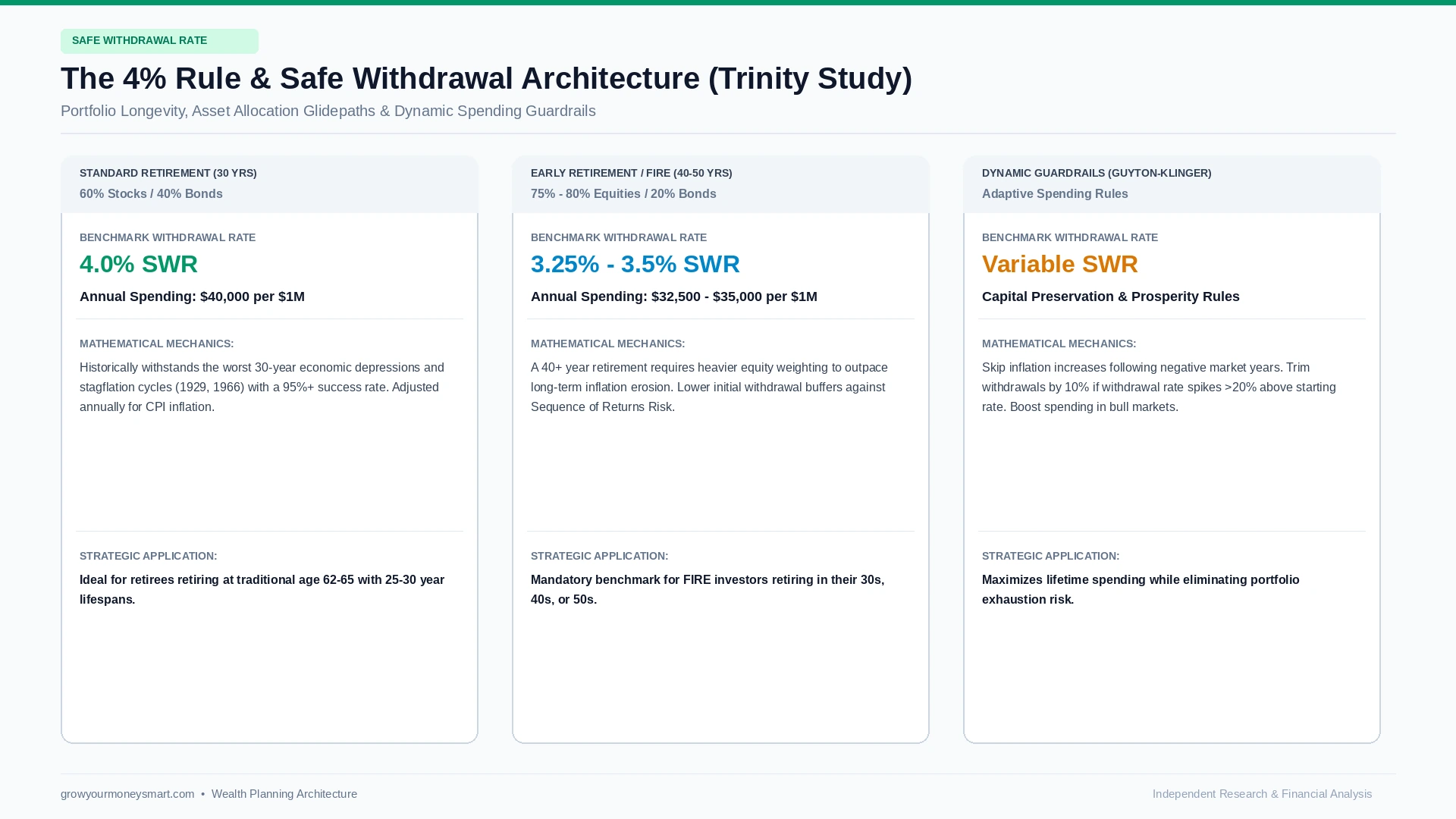
The 4 percent rule retirement safe withdrawal rate chart comparing 30 year standard retirement and early retirement FIRE portfolios

[QUICK ANSWER] The 4% Rule & Safe Withdrawal Rate at a Glance The 4% Rule states that a retiree can safely withdraw 4% of their total invested portfolio during their first year of retirement, adjusting subsequent annual withdrawals for inflation, with a 95%+ historical probability that the nest egg will survive at least 30 years … Read more

How to Max Out 401(k) and Roth IRA in 2026: Step-by-Step

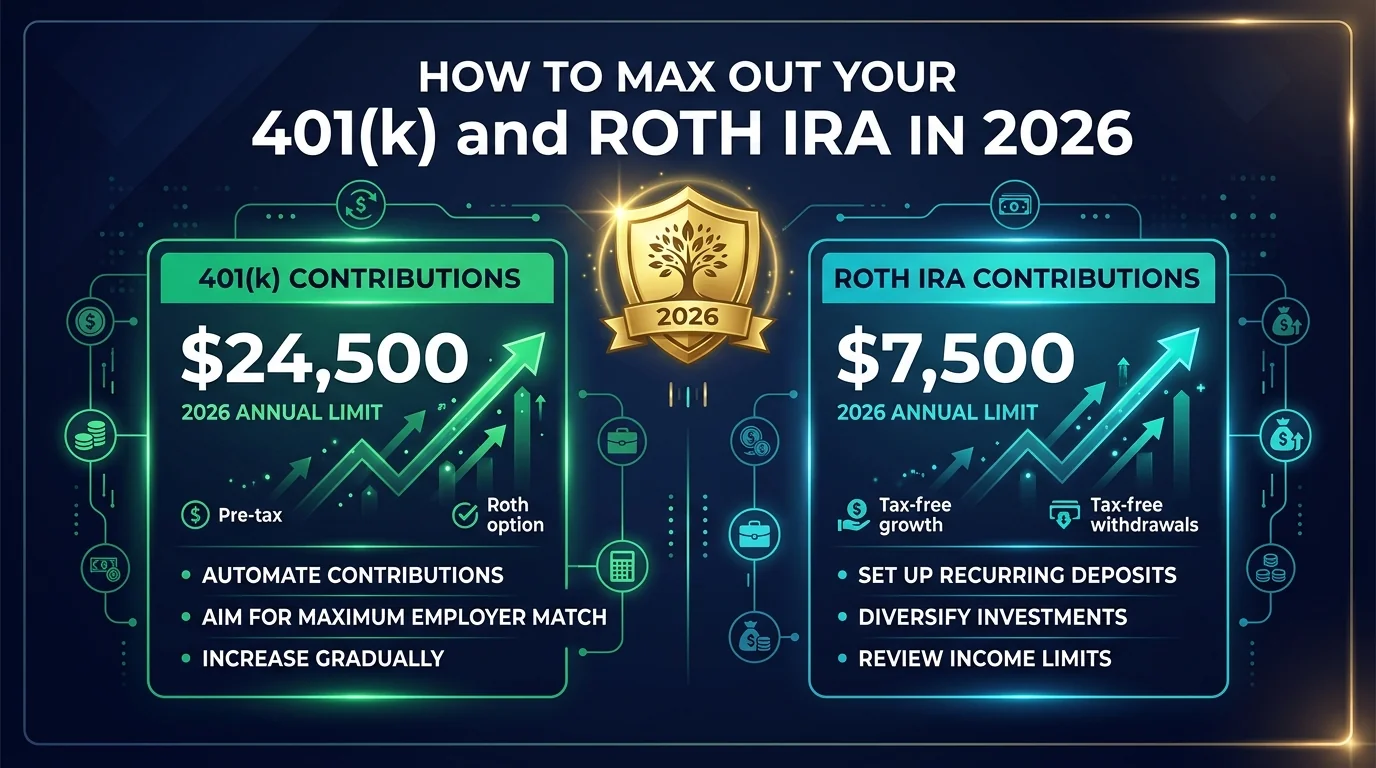
Infographic guide illustrating 2026 contribution limits of 4,500 for 401(k) and ,500 for Roth IRA with execution checklist

Learning how to max out 401(k) and Roth IRA in 2026 is the single most powerful strategy for building multi-generational wealth and achieving complete financial independence. If you have legacy accounts from previous employers, learn how to rollover a 401(k) to an IRA cleanly without triggering taxes or penalties. For high-income earners and disciplined savers … Read more

How Much Do You Need to Retire at 60? (2026 Guide)

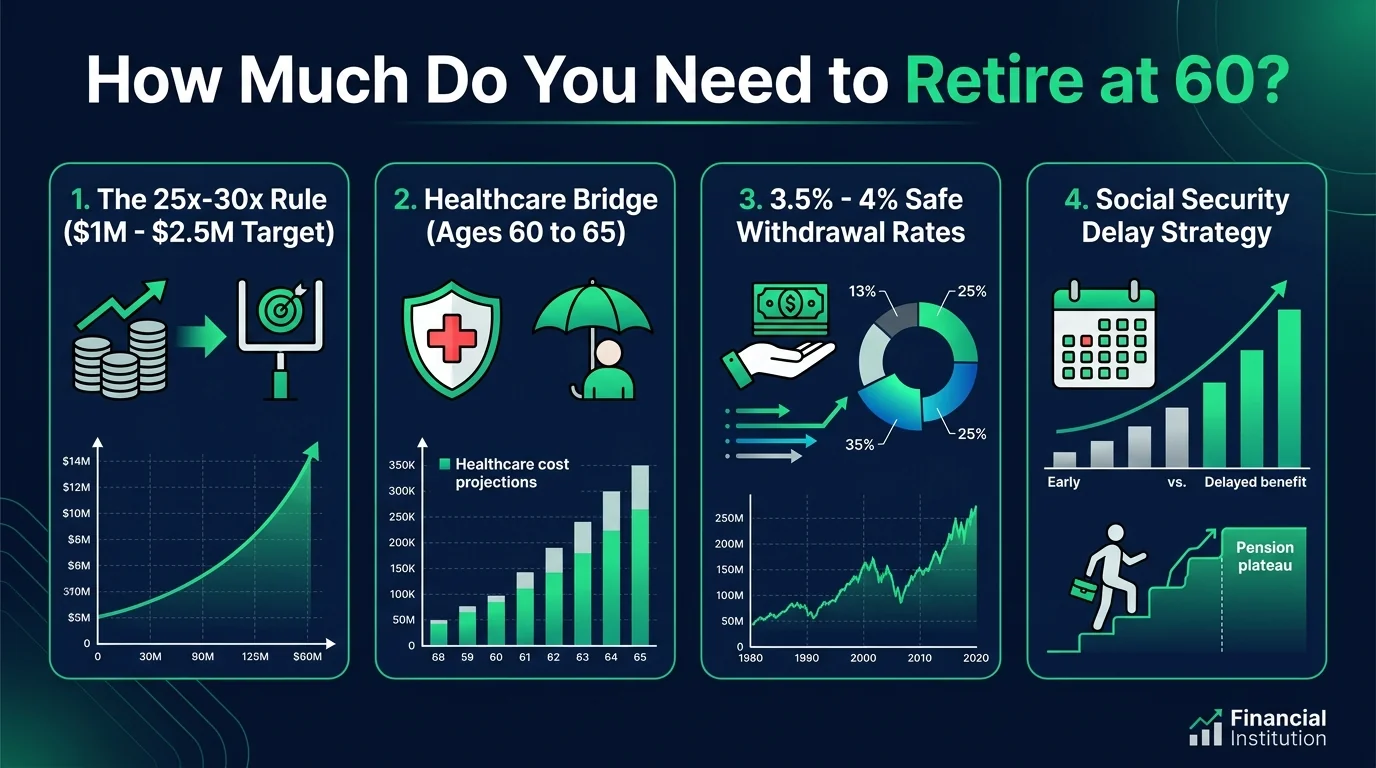
How much do you need to retire at 60 guide and retirement planning pillars infographic

🏛️ Official Regulatory Guidance & Consumer Verification Leaving the workforce prior to Medicare eligibility at age 65 requires bridging healthcare coverage and calculating early distribution rules. Consult the official Social Security Administration (SSA) Retirement Planning Guidelines for statutory guidelines and consumer protections. 🎯 Early Retirement Milestones & Safe Withdrawal Systems Validate your early exit numbers … Read more

Traditional IRA vs Roth IRA: Which Is Best in 2026?

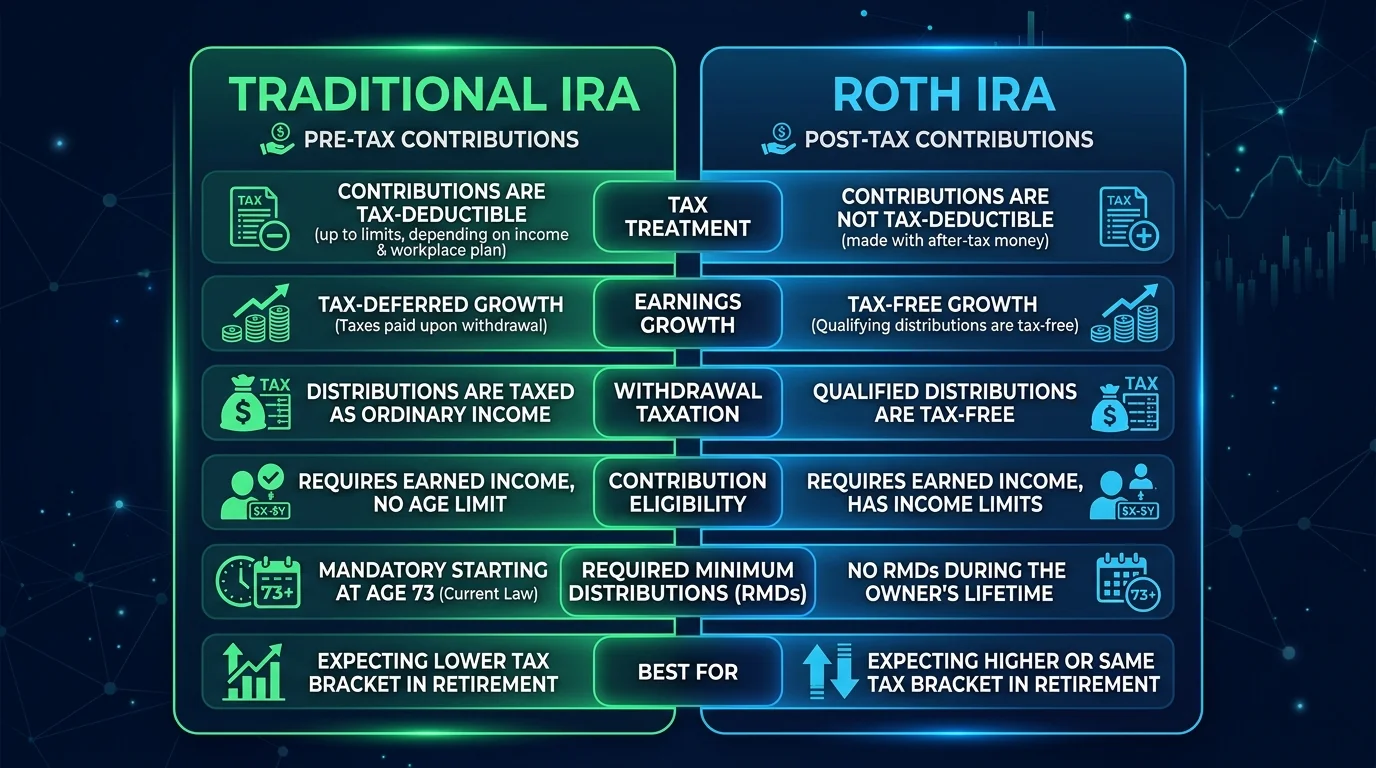
Traditional IRA vs Roth IRA comparison chart explaining tax treatment, contribution limits, and withdrawal rules

Choosing between an Individual Retirement Account (IRA) isn’t just about saving money—it’s about engineering your tax liability so Uncle Sam takes the smallest possible slice of your lifetime wealth. When weighing a Traditional IRA vs Roth IRA, the central decision hinges on one fundamental question: Do you want your tax break today, or do you … Read more

5 Stages of Retirement Planning: The Complete Guide (2026)

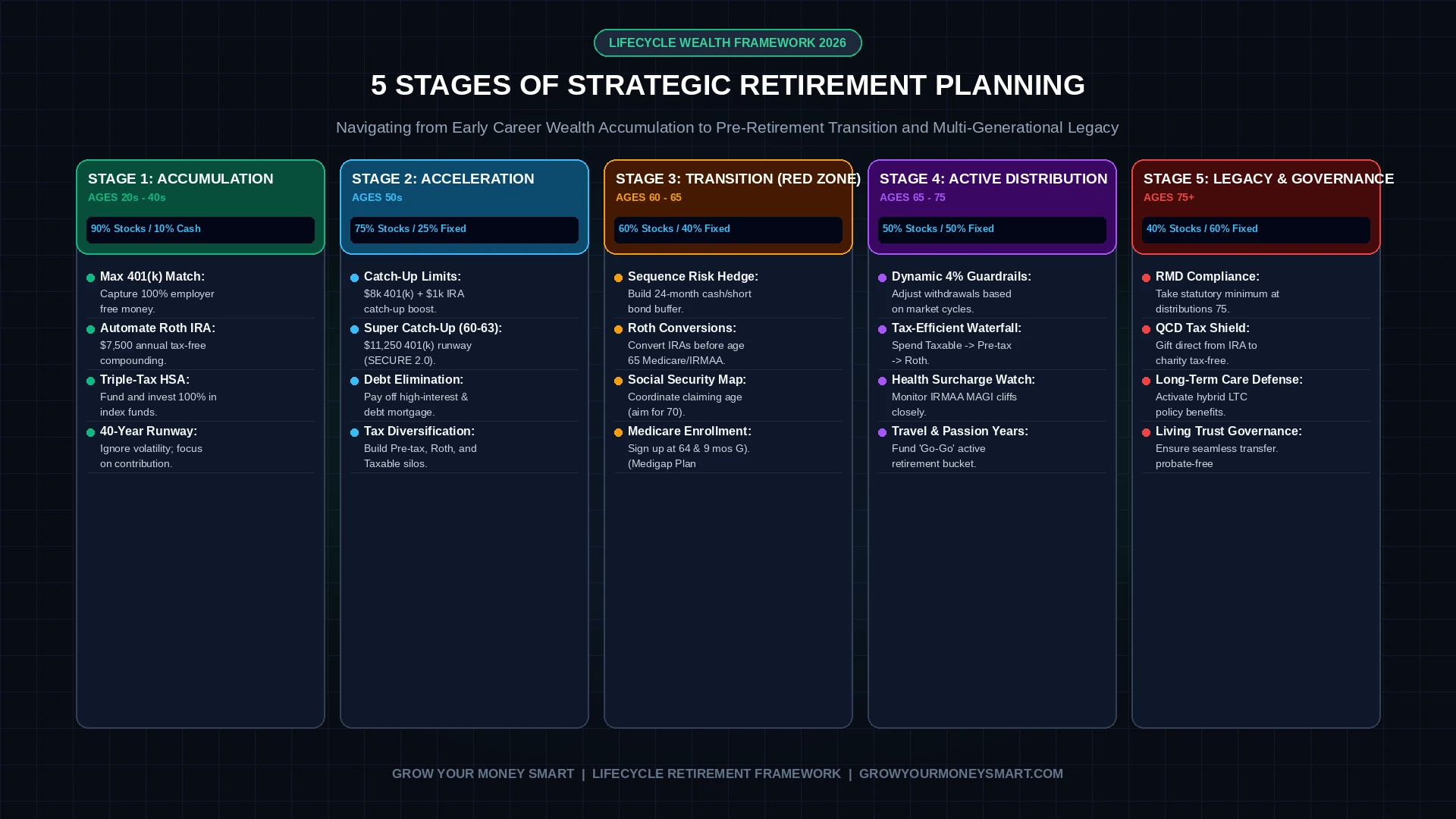
5 Stages of Retirement Planning infographic illustrating accumulation, acceleration, transition, distribution, and legacy phases

⚡ 30-Second Executive Summary: The 5-Stage Retirement Roadmap Retirement planning is not a one-time static calculation—it is a multi-decade dynamic continuum that evolves through five distinct phases. Success requires systematically shifting your strategic focus from aggressive asset accumulation to sequence-of-returns defense, tax-efficient distribution, and legacy governance. Stage 1 (Ages 20s–40s – Accumulation): 90% Equities / … Read more

Retirement Planning for Singles vs Couples (2026 Guide)

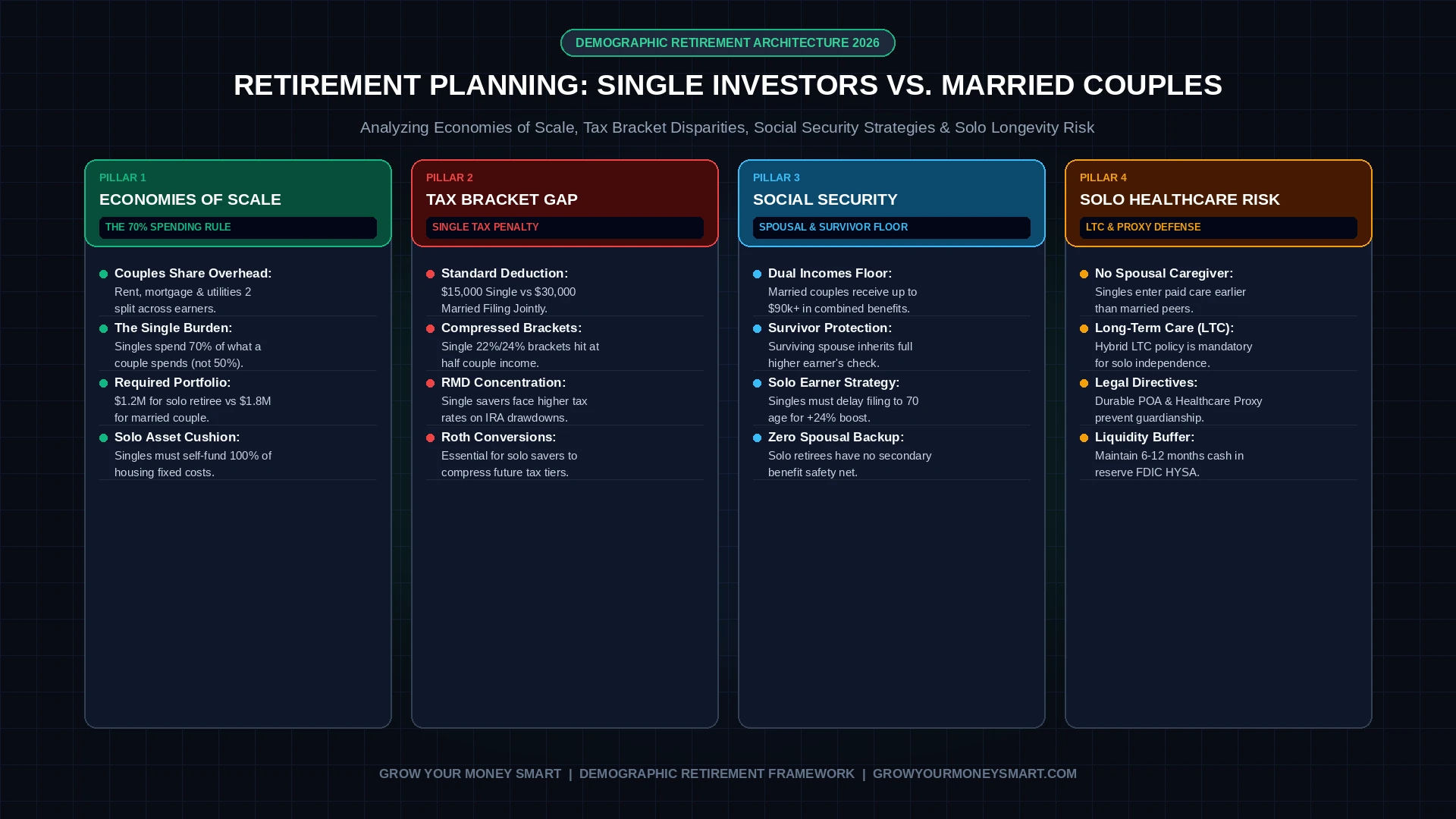
Retirement planning for singles vs married couples infographic comparing economies of scale, tax brackets, and social security strategies

🏛️ Official Regulatory Guidance & Consumer Verification Retirement benefits, spousal options, and survivor benefits for married couples vs individuals are administered by federal social insurance programs. Consult the official Social Security Administration (SSA) Benefits Planner for Families for statutory guidelines and consumer protections. 👫 Couple & Individual Retirement Tactics & Social Security Optimize tax brackets, … Read more

Start Early Retirement Saving: The Unbeatable Advantage

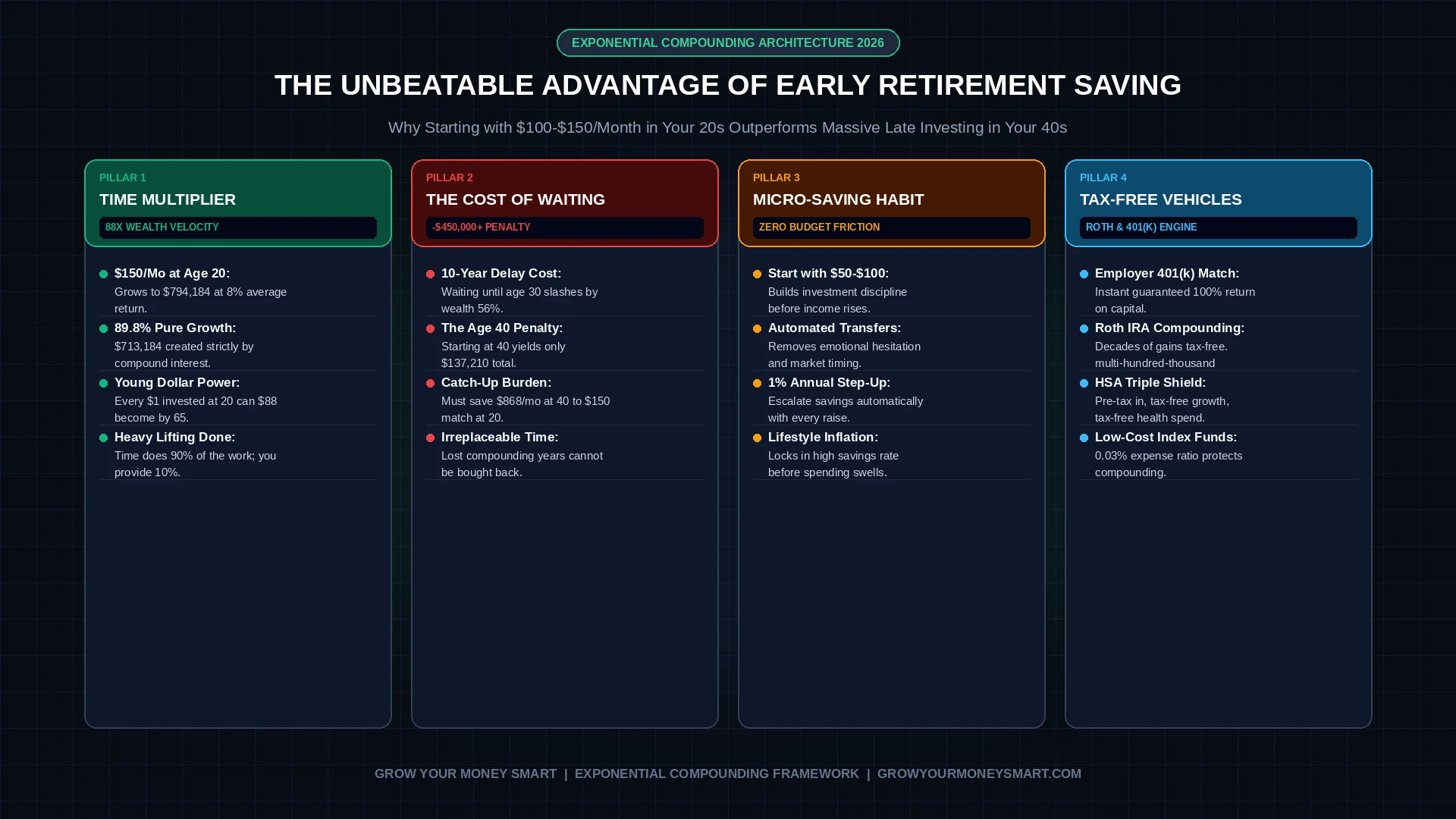
Early retirement saving infographic showing the compound growth advantage of starting with small monthly investments at age 20 vs 30 vs 40

🏛️ Official Regulatory Guidance & Consumer Verification Starting early harnesses exponential compounding math, allowing small regular contributions to outpace large late-career contributions. Consult the official SEC Investor.gov Compound Interest and Wealth Building Tools for statutory guidelines and consumer protections. 🚀 Compound Wealth Engines & Age-Based Milestones Capitalize on the unbeatable power of time and compounding … Read more

Receive the latest articles in your inbox

Join smart readers getting actionable personal finance tips, debt payoff blueprints, and retirement guides directly to their inbox.

⚖️ Important Financial Disclaimer & Educational Notice

The articles, calculators, debt payoff strategies, and financial tools on Grow Your Money Smart are provided strictly for general educational, illustrative, and informational purposes. Content published on this website does not constitute tailored financial, investment, tax, or legal advice.

Financial markets, interest rates, and personal financial circumstances vary significantly. You should evaluate your unique financial situation or consult a licensed Fiduciary, Certified Financial Planner (CFP®), or certified tax professional before making any significant financial decisions.

×