Cash Envelope System: Step-by-Step Beginner Guide (2026)
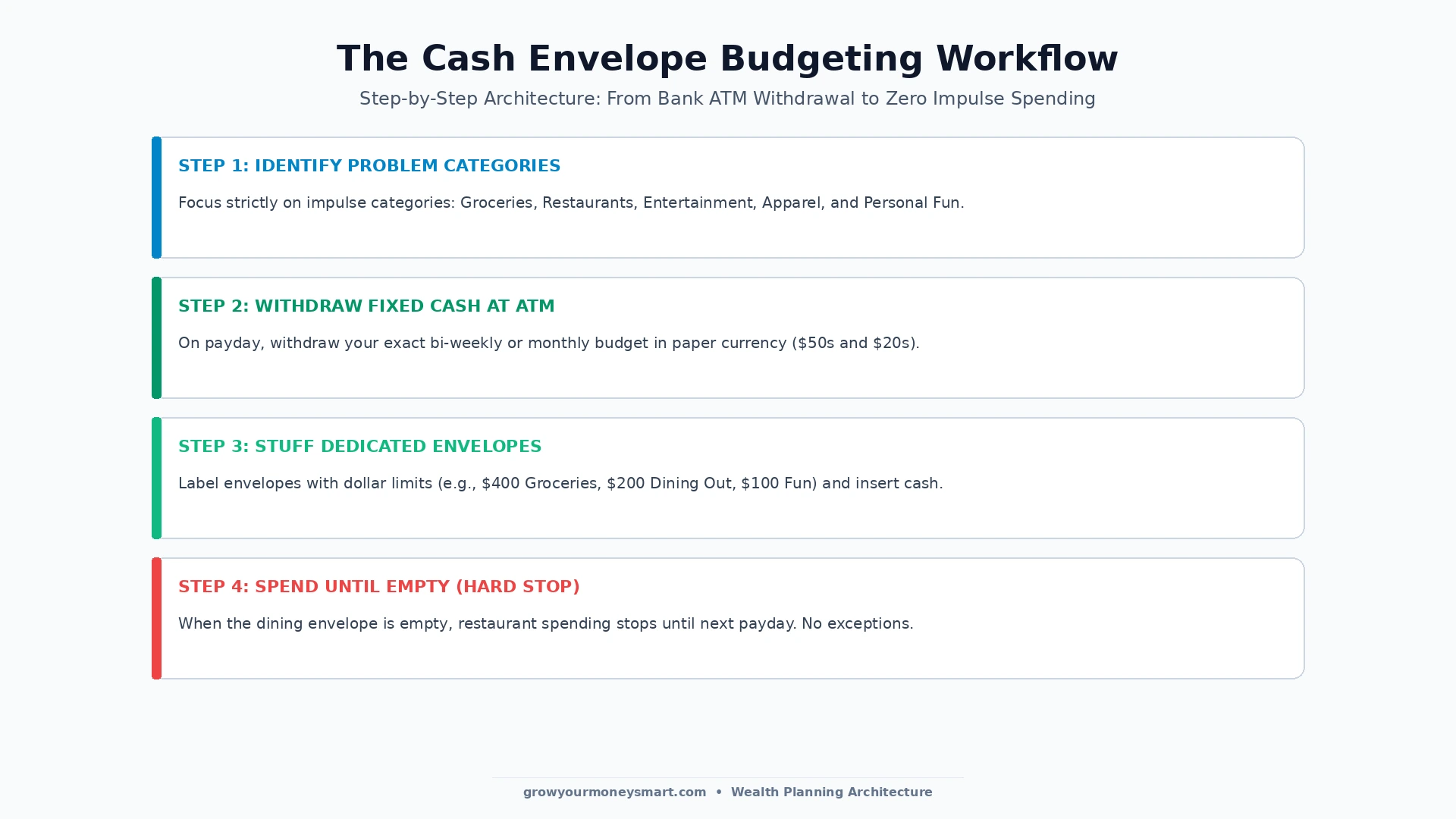
Workflow diagram illustrating the cash envelope budgeting method from identifying problem categories to stuffing envelopes and hard stop spending

[QUICK ANSWER] The Cash Envelope System at a Glance The cash envelope budgeting method divides physical cash into labeled paper envelopes for variable expenses (groceries, dining out, entertainment). Fixed bills stay on auto-pay in your bank. When an envelope runs out of cash, spending in that category stops completely until next payday—killing debt traps. ⚡ … Read more
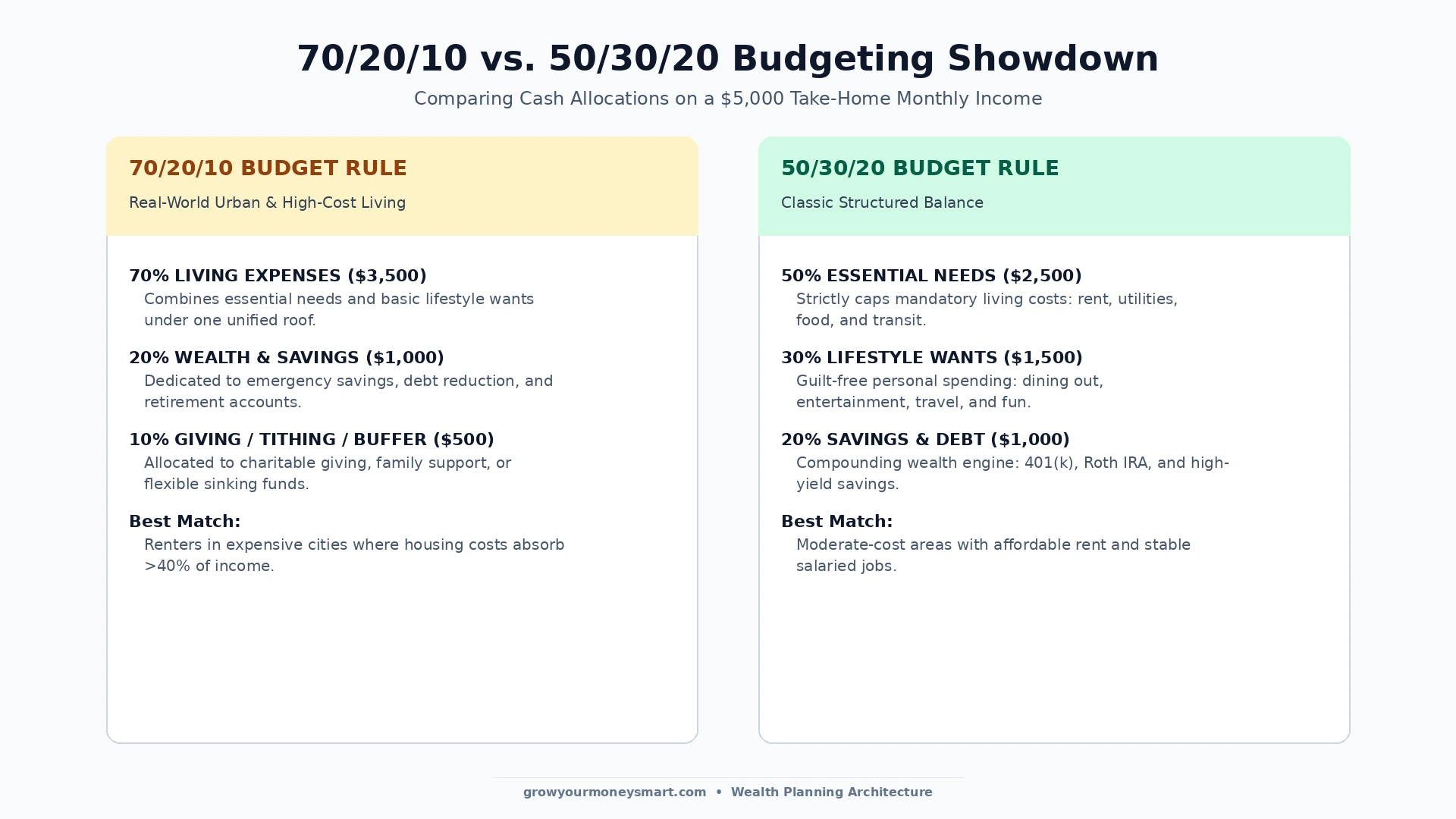
70/20/10 Budget Rule vs 50/30/20: Which Is Better? (2026)

Comparison chart showing the 70 20 10 budget rule versus the 50 30 20 budget rule across living expenses savings and giving

[QUICK ANSWER] 70/20/10 vs 50/30/20 at a Glance The 70/20/10 rule allocates 70% of take-home pay to all living expenses (needs and wants combined), 20% to savings/debt, and 10% to giving or sinking funds. The 50/30/20 rule splits expenses into 50% needs and 30% wants. Use 70/20/10 in high-rent urban markets; use 50/30/20 for stricter … Read more

How to Automate Savings: Hands-Free 2026 System

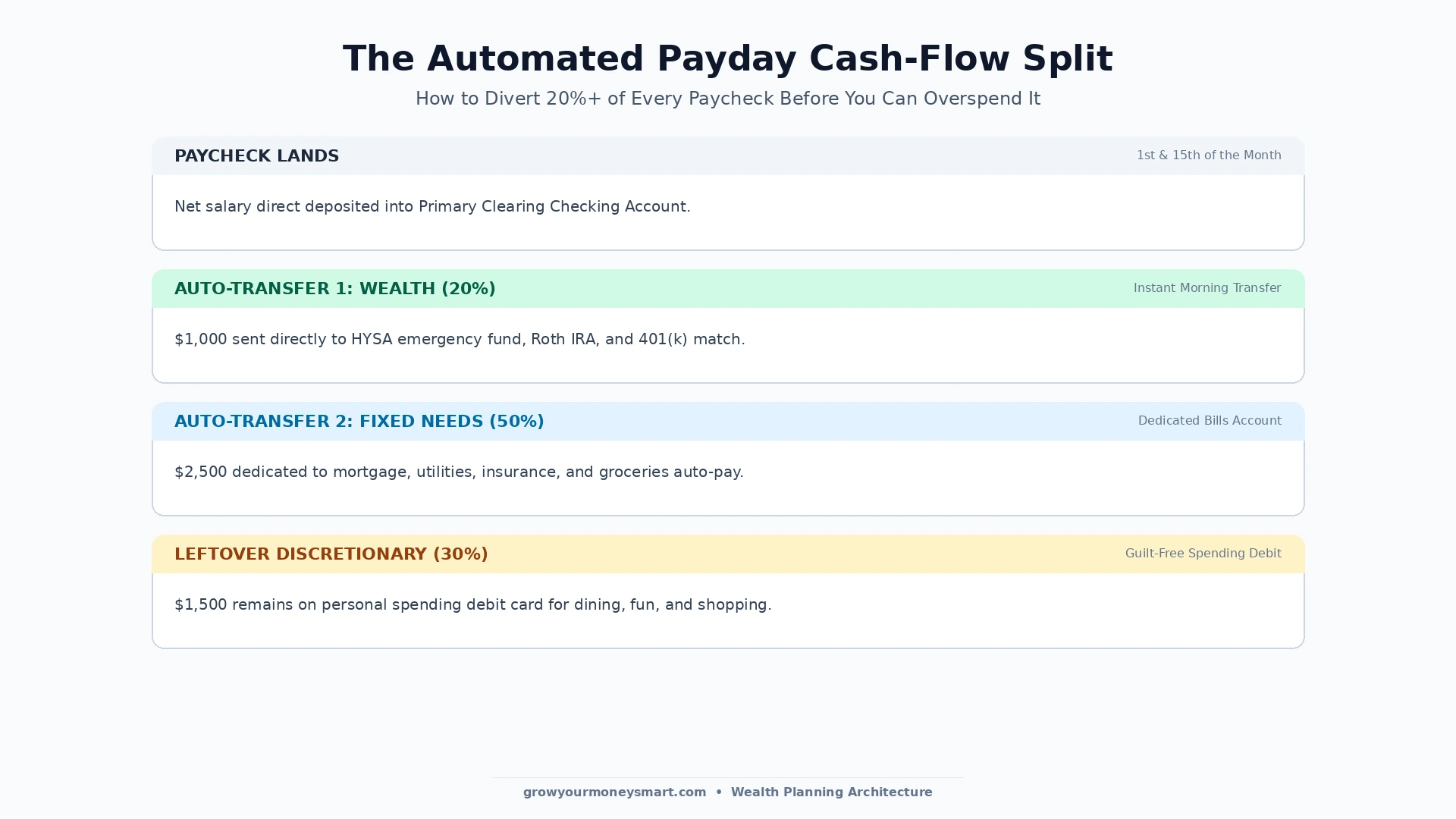
Cash flow diagram illustrating automated direct deposit splitting across wealth building needs and guilt free spending

[QUICK ANSWER] How to Automate Savings at a Glance To automate your savings, practice ‘Pay Yourself First’: split your payroll direct deposit so 20% routes straight into an FDIC-insured 4.0%+ HYSA and Roth IRA on payday. Put fixed living bills on automated full-balance payment, and spend only the remainder on a separate debit card. ⚡ … Read more

What Is a Sinking Fund? 8 Sinking Funds You Need (2026)

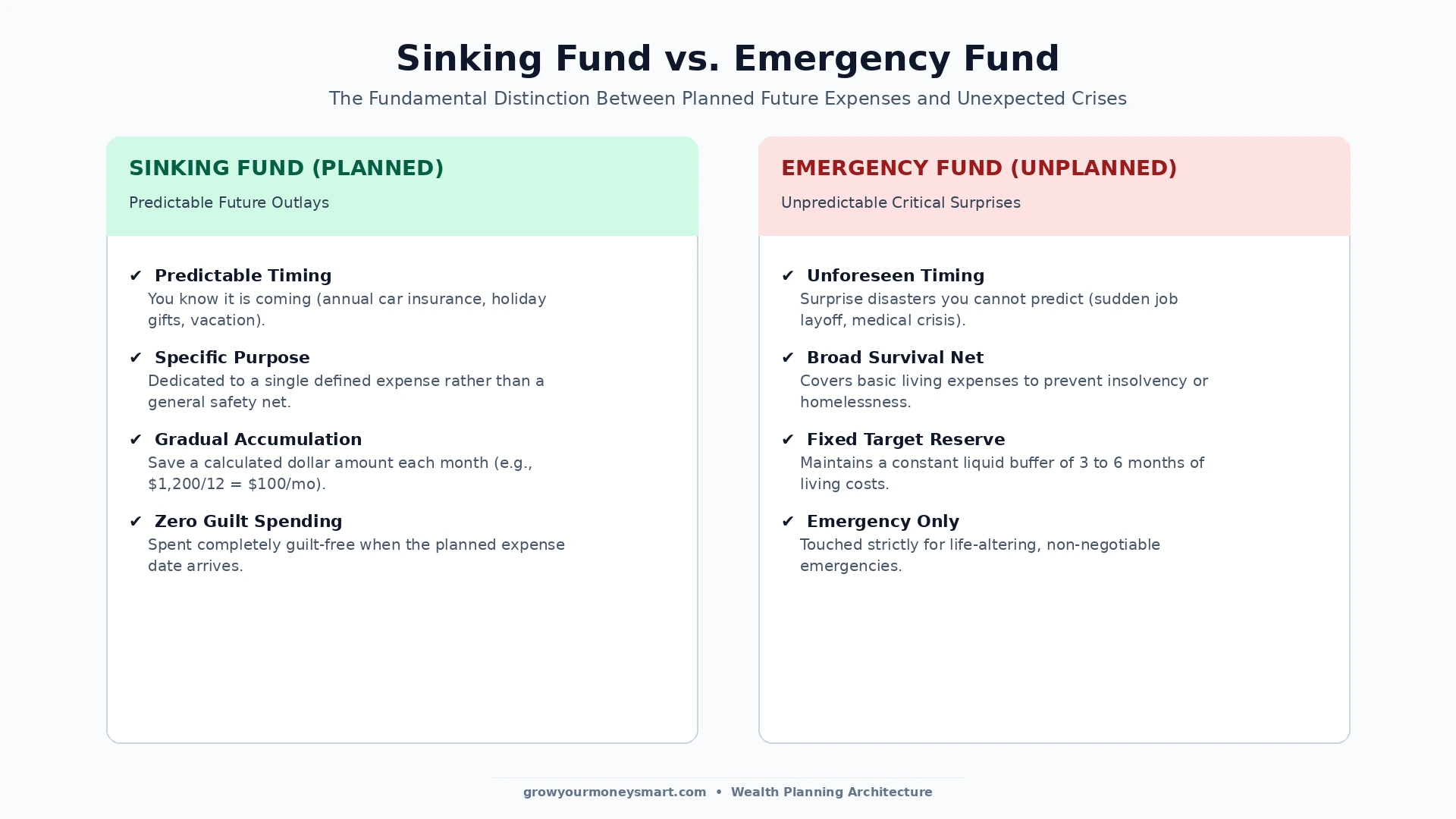
Comparison chart illustrating the difference between a sinking fund for planned future expenses and an emergency fund for unexpected crises

[QUICK ANSWER] What Is a Sinking Fund at a Glance A sinking fund is a strategic savings method where you save a set amount of money each month for a specific, expected future expense—such as car repairs, holiday gifts, or annual insurance premiums. Unlike emergency funds, sinking funds cover predictable costs, eliminating credit card debt … Read more

5 Best High-Yield Savings Accounts (Nov 2026): Top 5.35% APY

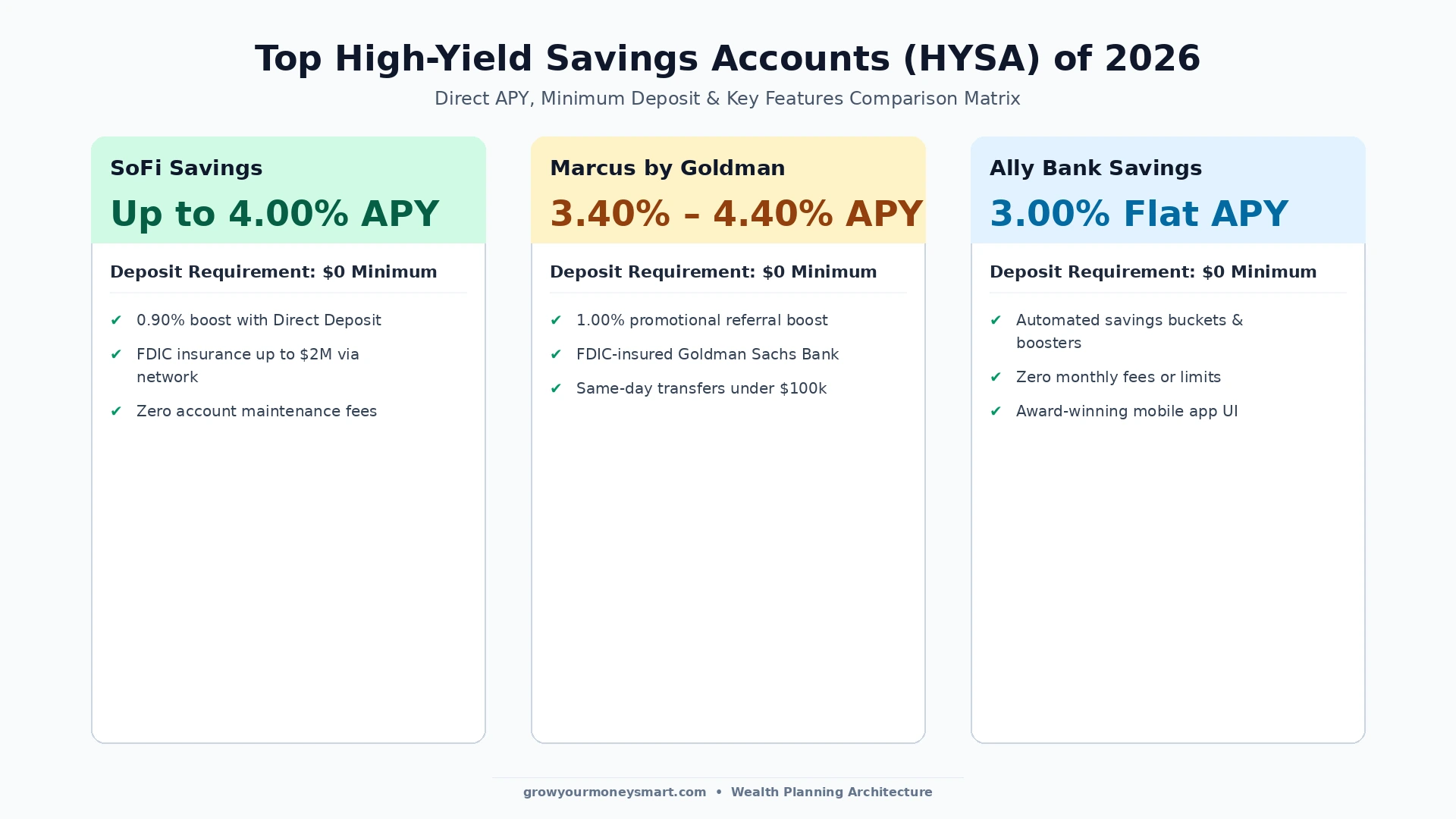
Comparison chart of the best high-yield savings accounts in 2026 comparing SoFi, Marcus by Goldman Sachs, and Ally Bank APY rates and features

[QUICK ANSWER] Best HYSA Accounts & Highest APY Savings in 2026 The best HYSA accounts 2026 (and top high-yield savings picks) yield between 3.00% and 4.40% APY—roughly 10x to 12x higher than legacy brick-and-mortar banks. For the highest APY savings, top contenders include Marcus by Goldman Sachs (3.40%–4.40% with referral/AARP bonus), SoFi (up to 4.00% … Read more

How to Budget a $5,000 Monthly Salary: 2026 Blueprint

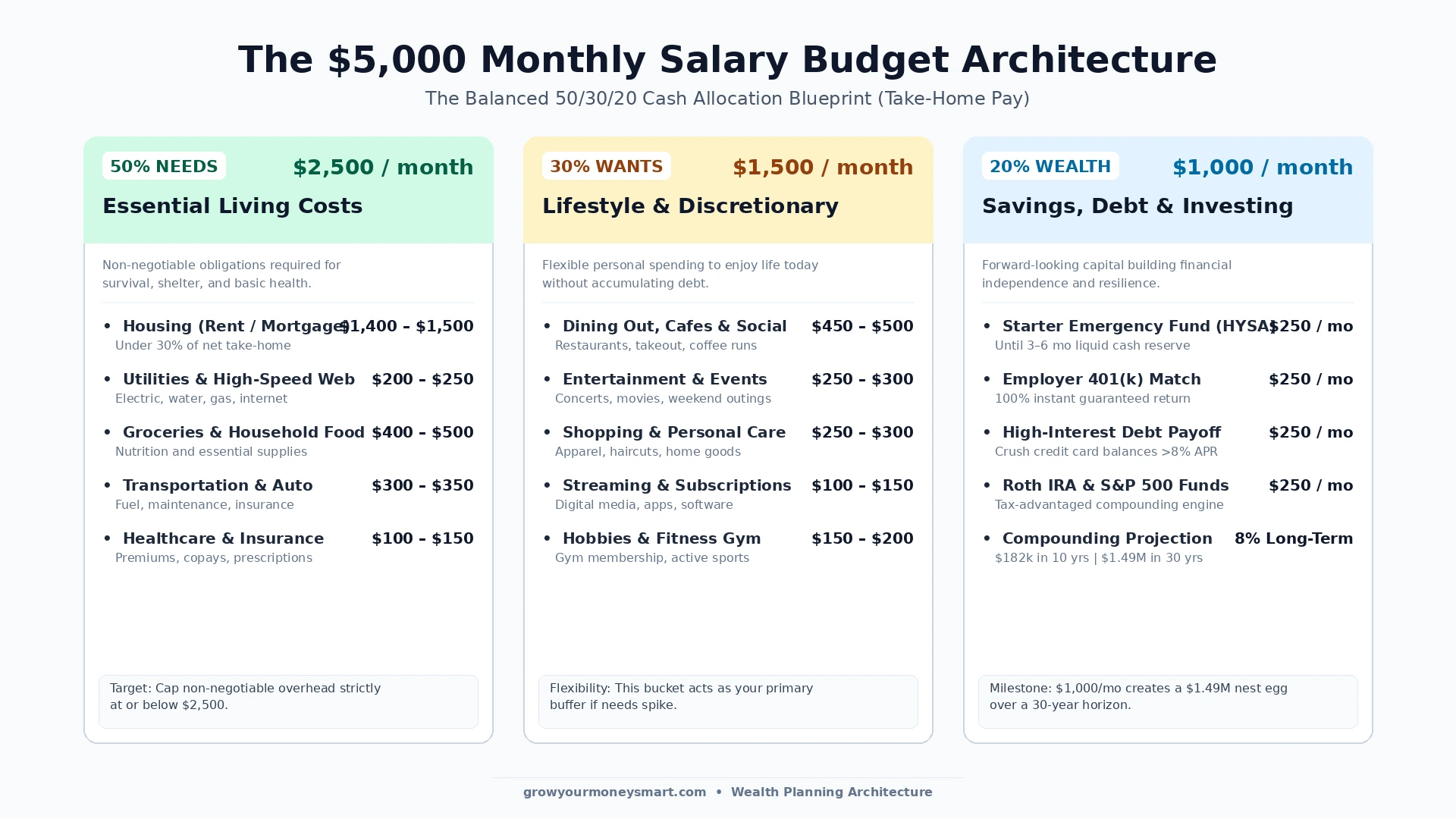
Visual architecture diagram showing how to budget a $5000 monthly salary using the 50/30/20 framework with $2,500 needs, $1,500 wants, and $1,000 savings

[QUICK ANSWER] How to Budget a $5,000 Monthly Salary at a Glance To budget a $5,000 monthly salary effectively, allocate your take-home pay using the 50/30/20 framework: $2,500 (50%) for essential needs, $1,500 (30%) for discretionary lifestyle wants, and $1,000 (20%) for debt payoff and compounding savings. Cap housing at $1,500 and automate your $1,000 … Read more

How to Budget a $6,000 Monthly Income: 2026 Blueprint

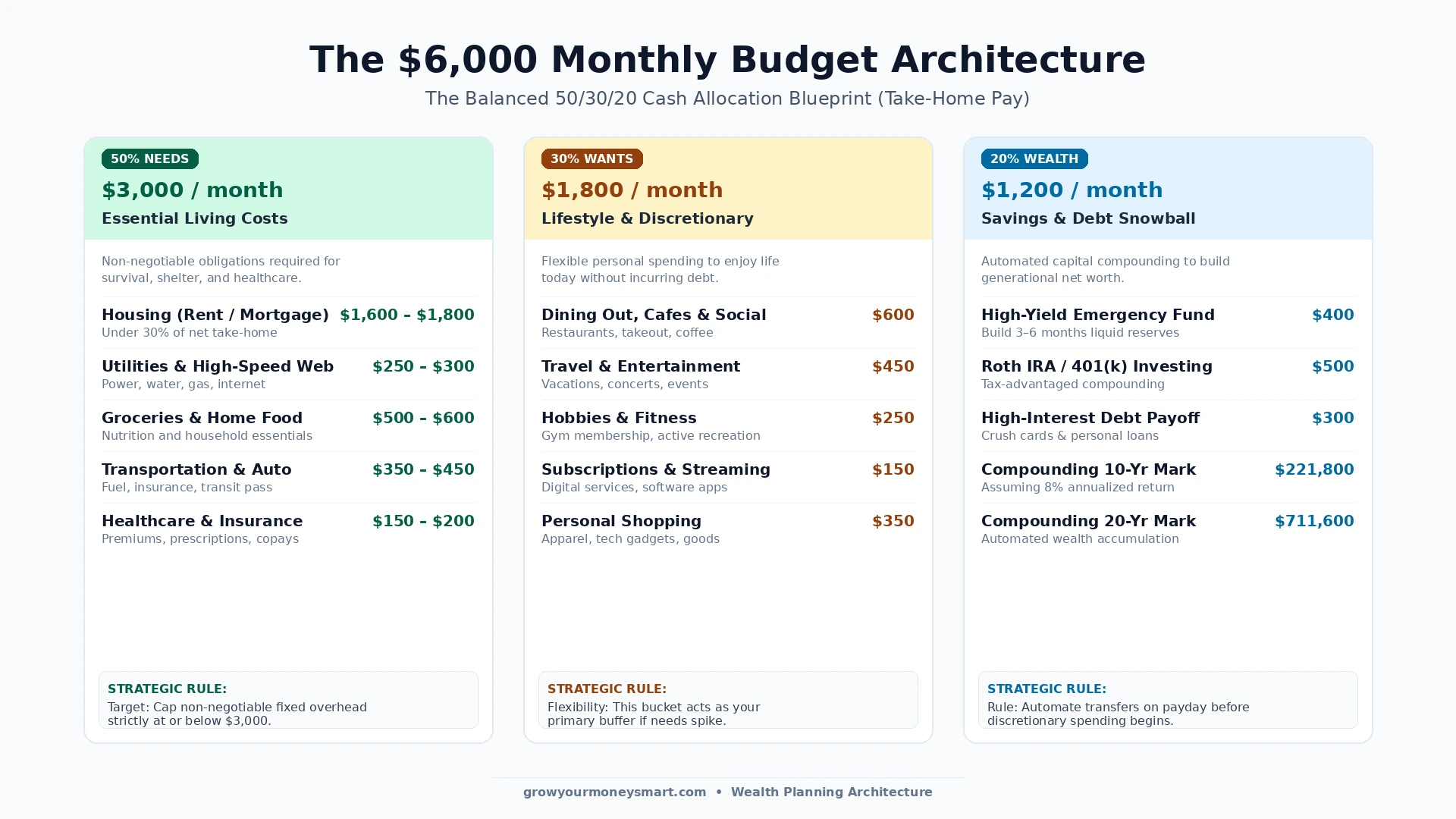
Visual architecture diagram showing how to budget a $6000 monthly income using the 50/30/20 framework with $3,000 needs, $1,800 wants, and $1,200 savings

Quick Answer $6,000 Monthly Budget at a Glance To budget a $6,000 monthly income effectively, apply the 50/30/20 rule to your take-home pay: allocate $3,000 (50%) to essential needs, $1,800 (30%) to flexible lifestyle wants, and $1,200 (20%) to debt payoff and compounding wealth. Cap housing at $1,800 and automate your $1,200 savings transfer on … Read more

Receive the latest articles in your inbox

Join smart readers getting actionable personal finance tips, debt payoff blueprints, and retirement guides directly to their inbox.

⚖️ Important Financial Disclaimer & Educational Notice

The articles, calculators, debt payoff strategies, and financial tools on Grow Your Money Smart are provided strictly for general educational, illustrative, and informational purposes. Content published on this website does not constitute tailored financial, investment, tax, or legal advice.

Financial markets, interest rates, and personal financial circumstances vary significantly. You should evaluate your unique financial situation or consult a licensed Fiduciary, Certified Financial Planner (CFP®), or certified tax professional before making any significant financial decisions.

×